
ISLAMABAD: Pakistan is likely to experience above-normal temperatures, localized heatwaves and an increased risk of flooding during the July-to-September period, according to the latest seasonal outlook issued by the Pakistan Meteorological Department (PMD).
According to PMD, high temperatures are expected in most of the country, especially in Balochistan, Punjab and the southern parts of Khyber Pakhtunkhwa.
It is predicted that heatwave conditions will occur in occasional waves in the plains of southern Punjab and Sindh, putting people at greater risk of heat illness in the peak of summer months.
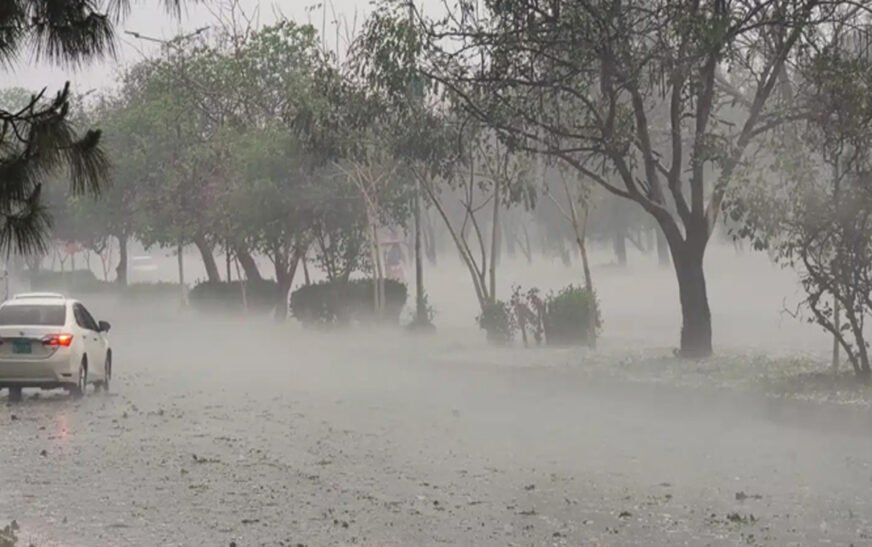
Rainfall in the form of normal to excess is predicted in northern areas, which include Gilgit-Baltistan, Azad Jammu and Kashmir, and the northern part of Khyber Pakhtunkhwa. Heavy rains can cause flash flooding, overflowing of streams and landslides in mountainous regions.
The climate change office added that the heavy rainfall in combination with rapid melting of snow will cause inflows of water in rivers and reservoirs. An increase in temperature can lead to an increase in glacial lake outburst floods in the north.
On the other hand, major cities in Sindh, Punjab, Khyber Pakhtunkhwa and Balochistan are prone to urban flooding when there is intense rainfall from the monsoon season.
Despite the likelihood of heavy rainfall in some areas, parts of Punjab, Sindh, Khyber Pakhtunkhwa and Balochistan are expected to receive below-normal precipitation. The department warned that reduced rainfall could affect Kharif crops, vegetables and orchards, increasing irrigation requirements for farmers.
Moreover, the Pakistan Meteorological Department warned that winds, dust storms, thunderstorms and hailstorms which may occur because of changing weather patterns would pose a threat to standing crops. It was suggested that farmers should keep an eye on the weather advisories to plan their irrigation, harvesting and other farm activities.
It was emphasized by the Pakistan Meteorological Department that precaution should be taken by the public in case of extreme hot weather by avoiding going out unnecessarily during the period of 11 a.m. to 4 p.m., drinking water and wearing light clothes.