British Parliament applauds Pakistan’s efforts in US-Iran negotiations, Keir Starmer thanks Pakistan

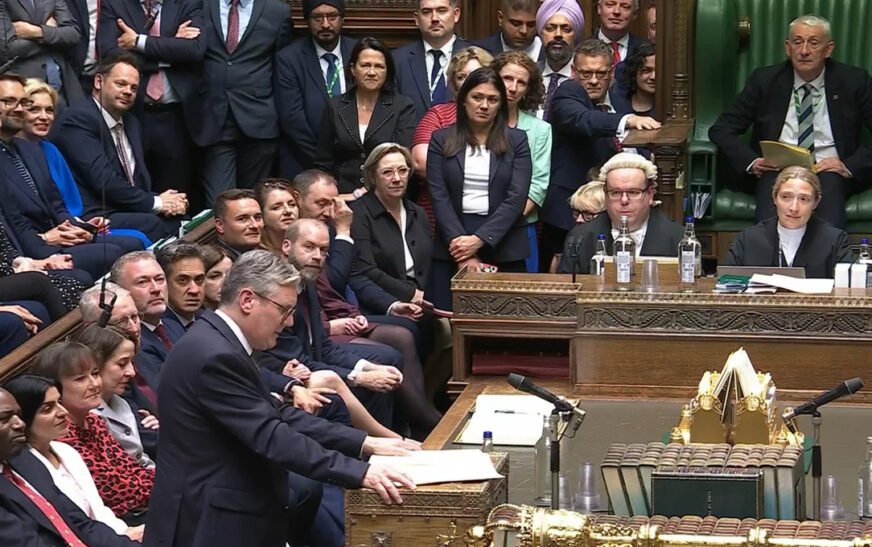
LONDON: Pakistan has been credited with playing a key role in arranging peace talks between the US and Iran as well as bringing about a ceasefire. The role played by Pakistan has gained the attention of the UK Parliament. Prime Minister Keir Starmer thanked Pakistan for its pivotal role in making efforts for peace in the region.
Parliament Member Afzal Khan has appreciated Pakistan for hosting the peace talks between the US and Iran and termed the step as an act of Pakistan’s leadership which helped Pakistan earn its place in the international community. “Pakistan’s role in the peace talks between the US and Iran is of great value to Pakistan,” said Afzal Khan, further noting that the entire world owes Pakistan a lot for its leadership, which includes not only Prime Minister Shehbaz Sharif but also the country’s Foreign Minister Ishaq Dar and military leadership as well.
Further on, Afzal Khan pointed out the importance of the role played by Pakistan in facilitating peace talks and alliances in the region of Middle East. Likewise, UK’s Prime Minister Keir Starmer also acknowledged the efforts put forth by Pakistan in peace talks. “Pakistan has done an excellent job in making peace talks happen, and I greatly appreciate their efforts,” he noted.
Iran’s Foreign Minister: We were inches away from ‘Islamabad MoU’
Meanwhile, after 47 years of stalled negotiations, high-level talks between the United States and Iran came close to reaching a historic agreement aimed at ending the ongoing conflict between the two nations. However, just as the two sides were about to sign the “Islamabad Memorandum of Understanding” (MoU), the deal collapsed, with Iranian officials accusing the U.S. of shifting its demands and taking a maximalist position and aggressive stance.
Iran’s Foreign Minister, Seyed Abbas Araghchi, voiced his frustration on social media, lamented the development, stating that the country had gone through the lengthy talks “in good faith” in order to settle the dispute. Although they were on the verge of making a breakthrough in the peace process, Araghchi pointed out that many issues had made it impossible for them to seal the deal.
“Encountered maximalism, shifting goalposts, and blockade. Zero lessons learned,” Araghchi tweeted.
The talks had reached an agreement on several vital matters, but were stalled due to fresh conditions laid down by the United States, which were not to the liking of Iran.
There were also more serious repercussions for the failure of the talks, as the Iranian Foreign Minister stressed during his tweet, saying that “Good will begets good will. Enmity begets enmity.”
In intensive talks at highest level in 47 years, Iran engaged with U.S in good faith to end war.
But when just inches away from “Islamabad MoU”, we encountered maximalism, shifting goalposts, and blockade.
Zero lessons earned
Good will begets good will.
Enmity begets enmity.— Seyed Abbas Araghchi (@araghchi) April 12, 2026