
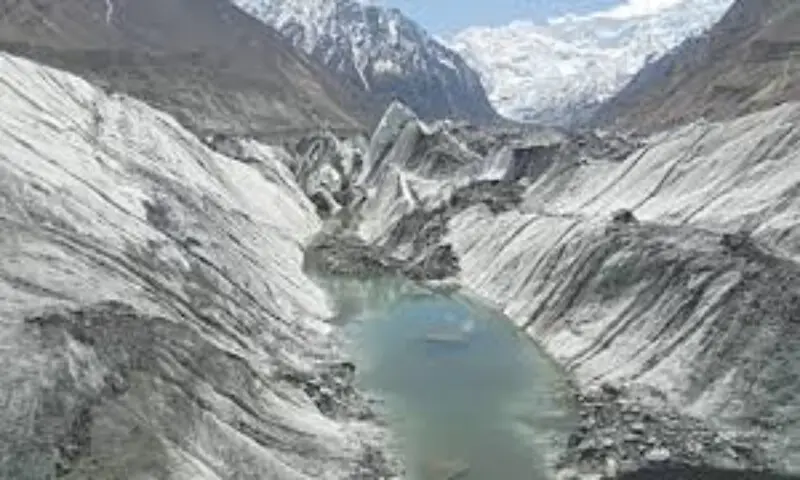
A new study has found that fuel consumption and the direct disposal of human urine on the glacier at Mount Everest’s base camp may contribute to the melting of nearly 2,500 tonnes of ice and snow every year.
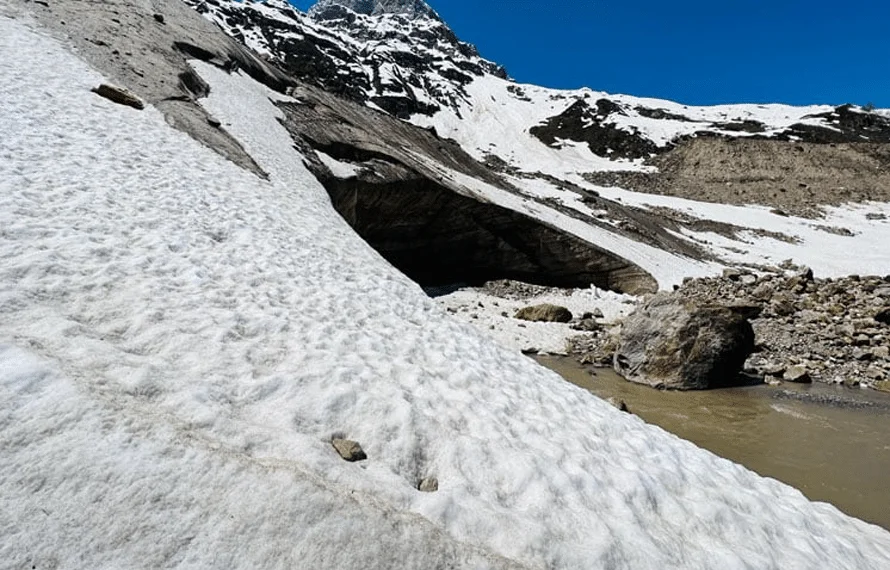
According to the study, human activity at the Nepal-side Everest Base Camp is having a measurable impact on the Khumbu Glacier, where thousands of climbers, guides and support staff gather during the spring climbing season.
The research, published in the scientific journal Regional Environmental Change, examined activities at the base camp during the 50-day spring season of 2023. Researchers estimated that 824 cans of liquefied petroleum gas (LPG), 18,935 litres of kerosene and 5,130 litres of petrol were used to operate around 1,600 tents.
The fuel was used for cooking, heating and electricity generation. Researchers calculated that the combined heat generated by fuel consumption and human urine amounted to around 849,174 megajoules of energy.
They estimated that this amount of energy could melt approximately 2,492 tonnes of ice and snow, with the potential range estimated at between 1,964 and 3,020 tonnes.
The amount of meltwater would be enough to fill an Olympic-sized swimming pool and is equivalent to around 83 tanker trucks or 16,700 standard bathtubs.
The study identified human urine as a significant source of heat at the base camp. Climbers and guides consume large quantities of water to prevent dehydration at high altitude, resulting in an estimated 6,000 litres of urine being produced at the camp every day.
While solid human waste is collected and transported down the mountain, large quantities of urine are reportedly discharged directly onto the glacier.
Researchers estimated that heat from human urine alone could contribute to the melting of around 154 tonnes of ice during a single climbing season.
The study also examined temperature trends around Everest Base Camp using Landsat satellite imagery from 1991 to 2023.
Researchers found that surface temperatures at the base camp increased by an average of 0.28°C per year, roughly twice the rate recorded across the surrounding Khumbu Glacier.
The researchers noted that the actual impact of human activity could be greater, as their calculations did not include heat generated by helicopter flights, climbers’ bodies or yaks used to transport supplies.
However, the researchers stressed that climate change remains the primary cause of glacier melting on Mount Everest.
They warned that the continued concentration of thousands of people each year on an increasingly fragile and rapidly melting glacier may not be sustainable in the long term.
The study recommended considering the relocation of Everest Base Camp from the glacier to a more stable nearby location in the future.
Read also: PDMA issues alert in upper KP districts over potential glacier melting