
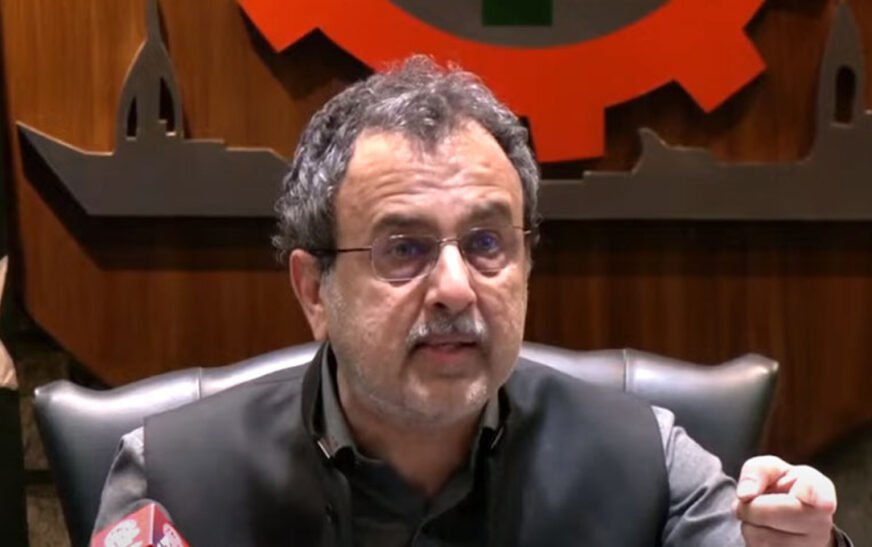
ISLAMABAD: Federal Minister for Energy Awais Leghari has said that the government is engaged in discussions with the International Monetary Fund (IMF) to secure approval for providing electricity at reduced rates during specific hours.
Speaking at a conference on Battery Storage Flexibility 2026 in Islamabad, the energy minister said the IMF was currently not allowing Pakistan to introduce such a facility, but negotiations on the matter had been ongoing for the past few months.
Leghari said lower electricity rates during selected hours could help increase power consumption and improve efficiency in the energy sector. He added that the government would present all relevant facts before the IMF and seek approval for the initiative.
The minister referred to international examples, saying that a company in Australia had significantly increased electricity sales through similar flexibility measures.
Discussing broader energy reforms, Leghari said Pakistan was moving towards a comprehensive energy transformation, with the country’s first detailed energy plan expected to be introduced in April next year.
He said the availability of solar power during daytime hours had already improved the electricity situation, while consumers would gradually be able to store solar energy and use it at night in the future.
The energy minister said the share of clean energy in Pakistan’s power generation had reached 55 percent, while the government aims to increase it to 90 percent by 2035.
He emphasized that achieving the clean energy target would not be possible through solar and wind power alone, adding that battery storage would play a key role in balancing the national grid and turning electricity into a more efficient national resource.
Leghari further said the government was focusing on promoting local battery energy storage manufacturing instead of relying on imports. He added that local engineering, system integration and battery management software development would be encouraged.