
PESHAWAR: The Khyber Pakhtunkhwa (KP) Assembly has passed a series of legislative amendments granting provincial lawmakers unprecedented administrative, executive, and legal authority over state institutions.
According to administrative experts, the new legislation alters the constitutional balance of power by allowing Members of the Provincial Assembly (MPAs) to directly intervene in executive matters. Under the new clauses, lawmakers are now legally empowered to summon any district officer within their constituency.
Experts note that no other provincial assembly in Pakistan grants such powers to its members, raising concerns over political interference in the bureaucracy. Furthermore, the amendments authorize MPAs to chair official meetings of government departments, administrative bodies, and autonomous corporations in the absence of the Governor or the relevant Minister.
Critics argue this measure directly violates the democratic principle of the separation of powers by placing legislative members in executive roles. The legislation also changes legal procedures involving lawmakers. Law enforcement agencies must now obtain prior permission from the Assembly Speaker before arresting any member.
The KP new law revealed extensive legislative amendments outlining a substantial expansion of powers and privileges granted to the KP MPAs. Under section 8 of the newly passed legislation, any MPA holds the explicit power to summon an official meeting within their constituency or district at any specified public place.
The law dictates that every government officer assigned to that district is legally bound to attend the meeting, provided they receive due notification. Any government official who fails to attend the summoned meeting without a valid or sufficient cause will be legally deemed to have committed a breach of privilege, exposing them to subsequent disciplinary or legal action.
Furthermore, Section 9 of the legislation establishes that any meeting convened by a government or semi-government institution, autonomous body, or Board in which a Member is supposed to participate must be presided over by that Member.
The clause specifies that if the Governor, a Federal Minister, a Provincial Minister, an Advisor to the Chief Minister, or a Special Assistant to the Chief Minister is present, the Member will not preside over the meeting. An accompanying explanation clarifies that for the purpose of this section, the presiding over of a meeting by a Member shall be ceremonial and in an honorary capacity.
In cases where more than one Member is scheduled to participate in the meeting, the presiding Member must be elected through either consensus among the Members or a vote among the Members. The legislation also alters criminal and detention protocols involving politicians under Section 11, which dictates that when a Member has to be arrested on a criminal charge or for a criminal offence or has to be detained under an executive order, the Magistrate or the executive authority must seek prior permission of the Speaker.
This request must indicate the reasons for the arrest or detention of the Member in the appropriate form set out in the Second Schedule. Where the Speaker deems it necessary in the public interest, he may require the relevant police officer to submit the police report or challan to ascertain the facts of the matter, and the Speaker may, in his discretion, call up such inquiry before submission of the challan in the court, as he may deem appropriate.
Additionally, Section 13 introduces a comprehensive list of additional privileges for lawmakers, stating that notwithstanding anything contained in any other law for the time being in force, a Member shall be entitled to several specific perks.
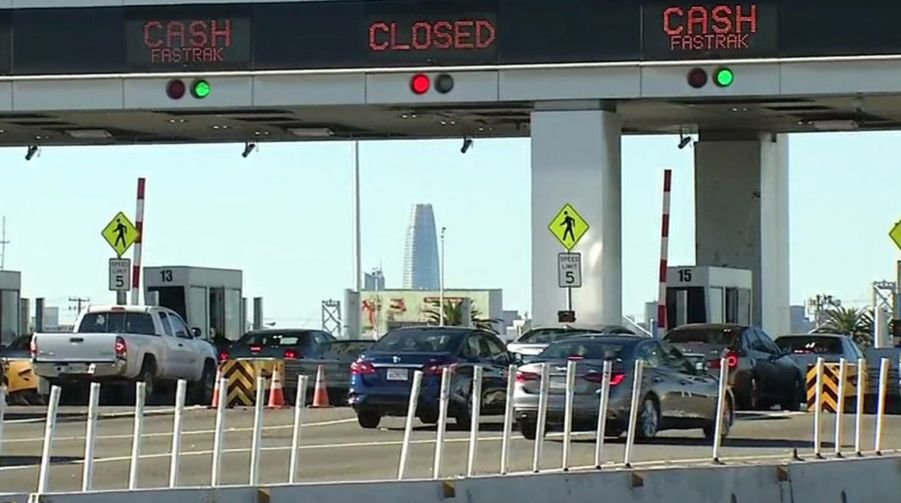
Moreover, lawmakers are granted free of charge accommodation in every Circuit House, Rest House, Dak Bungalow, or any other accommodation maintained by the Government, local body, or authority for a period of three days. They are also entitled to the granting of eight arms licenses of non-prohibited bore weapons, with four on a gratis basis for a lifetime and four on payment of a notified fee, alongside a complete exemption from the payment of all toll taxes.
The amendments also grant lawmakers the authority to visit jails, hospitals, dispensaries, health centers, population planning centers, social welfare centers, educational institutions, any other public office, or any project or site funded by the Government or serving as a revenue source for the exchequer to check whether they are functioning properly.
Alongside exercising the powers of the Justice of Peace, MPAs are permitted to fix a plaque on their personal cars bearing the inscription of M.P.A. The law further mandates the issuance of an Assembly identity card for the spouse of a Member, which shall be duly recognized, and to which all law enforcement agencies shall extend due regard.
Finally, the remaining clauses of Section 13 secure high-level travel, leisure, and vehicular allowances for the MPAs. Lawmakers are permitted the use of VIP lounges at all airports across the country, as well as an official passport and the same passport facility for his or her spouse for life, subject to the provisions of applicable Federal Law.
They are also granted membership in clubs on the same terms and at the rates applicable to Government officers, and are legally authorized to operate a personally used vehicle outfitted with tinted or darkened glass.
Read also: Police Need Speaker’s Nod to Arrest MPA? Naqvi Questions KP Rule