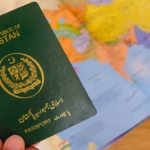


Pakistan is witnessing one of the worst waves of migration in its history as severe unemployment and economic pressure are forcing thousands of educated youth to leave the country every year.
With record inflation, shrinking industries, and very limited job creation in both government and private sectors, young graduates with degrees, skills and dreams are finding no space for themselves at home. The only option left for many is to board a flight and look for work abroad.
Official data shows that more than 800,000 Pakistanis left the country for employment in 2025 and 2026. More than 60 percent of them were between 18 and 35 years of age.
In Khyber Pakhtunkhwa the situation is even more visible. Every month, hundreds of engineers, IT professionals, doctors, teachers and skilled workers from Peshawar, Mardan, Swat and Haripur apply for visas. Many of them are not unskilled laborers. They are graduates who studied for years but could not find a single stable job here.
Government hiring has slowed down drastically and the private sector is struggling due to high electricity bills, taxes and lack of investment.
A fresh graduate often waits two to three years just to appear in a government job test. Even those who do get jobs are offered salaries between Rs 50,000 to Rs 80,000, which is not enough to survive with rising rent, food and fuel prices. In contrast, the same qualification can earn five to ten times more in Gulf countries, Europe, Canada or Australia.
Many young people talk about lack of merit and lack of future. A 26-year-old software engineer from Peshawar who recently moved to Dubai said he applied to 40 companies in Pakistan over two years.
He got two interviews and one offer of Rs 60,000. In Dubai he got a job within one month with eight times the salary. Stories like this are common in every city now.
Experts warn that this is not just migration, it is a brain drain. Pakistan is losing doctors, engineers, IT experts and teachers at a time when it needs them the most. This is hurting hospitals, universities, startups and the overall economy. Remittances may provide short term relief, but the country is losing the very people who could build industries and pay taxes in the long run.
The federal and KP governments have announced youth loan schemes, skill programs and IT training centers. But critics say these steps are too small compared to the size of the problem. Without major industrial growth, new investment and a transparent merit-based hiring system, the trend will only grow.
For the youth, leaving is not a choice made happily. As one graduate from Haripur now working in Saudi Arabia said, “We don’t want to leave our parents. But here there is no respect for degrees, no jobs, and no security.”
Until Pakistan creates millions of new jobs and restores hope for its young population, airports will continue to see long lines of one-way tickets and tearful goodbyes.
Read also:Construction Work on Jawan Markaz Bannu start under KP Directorate of Youth Affairs