
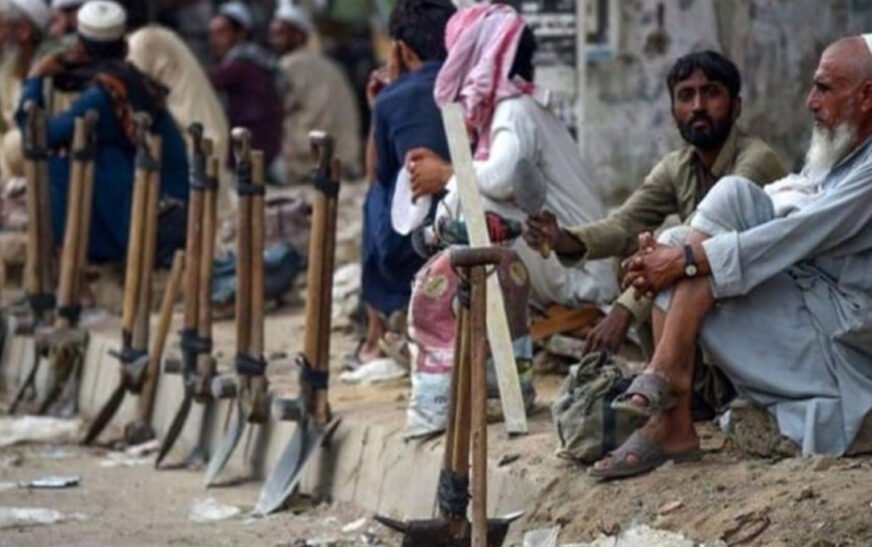
The Pakistan Institute of Development Economics (PIDE) has recommended a national minimum wage reference benchmark of Rs. 45,000 per month for FY2026–27, 12.5 percent more than the current notified wage of Rs. 40,000.
In Policy Viewpoint No. 62, titled “Reforming Minimum Wage Determination in Pakistan: From Wage Announcements to Wage Governance,” PIDE researchers propose a hybrid framework aligned with International Labour Organization (ILO) principles.
The model balances purchasing power protection, adequacy for worker households, labour market affordability, partial productivity sharing, and provincial implementation realities. Highlighting the importance of the reform, Dr. Nadeem Javaid (SI), Vice Chancellor of PIDE and Member of the Planning Commission of Pakistan, said, “Pakistan needs a credible wage governance system that balances worker protection, productivity, business sustainability, and macroeconomic stability within a transparent institutional framework.”
“A country aspiring for export-led growth and social stability cannot afford working poverty, wage uncertainty, and fragmented labour market governance. Sustainable economic reform must also translate into dignity, predictability, and economic security for workers,” he added.
The proposed framework is based on four key pillars, which include transparent evidence-based wage setting, bounded provincial adjustment, effective enforcement mechanisms, and annual reporting on outcomes.
Under the proposed “national reference benchmark with provincial calibration” model, provinces would retain constitutional authority to set wages at or above the national floor based on local economic conditions.
Indicative provincial benchmarks suggest Rs. 45,000 for Punjab and Khyber Pakhtunkhwa, Rs. 46,000 for Sindh due to higher urban living costs and formal-sector concentration, and Rs. 45,500 for Balochistan, reflecting geographic and market access challenges.Dr. S. M. Naeem Nawaz, Professor of Economics at PIDE and co-author of the study, said, “A credible wage floor must be one that workers can realistically receive, and provinces can realistically enforce.
Read also: Labour Day: A celebration, yet darkness still prevails in workers’ lives