
Egyptian archaeologists have discovered the remains of a city dating back to the Byzantine era, about 2,000 years, in the coastal area of Marina El Alamein on the Mediterranean Sea, while ancient tombs, human remains, gold artefacts and historical manuscripts were also recovered during the excavation.
According to the Egyptian Ministry of Tourism and Antiquities, the discovery was made at Marina El Alamein, about 100 kilometers west of Alexandria, where 18 tombs belonging to the Roman and Greek periods were also discovered during recent archaeological excavations.
According to the ministry, human remains, ancient manuscripts, pottery, and several underground artefacts were recovered from the tombs. Among the important discoveries were 24 gold objects, which were buried with the dead as part of burial rituals. Experts believe that these objects are related to ancient Greek and Roman religious and cultural traditions.
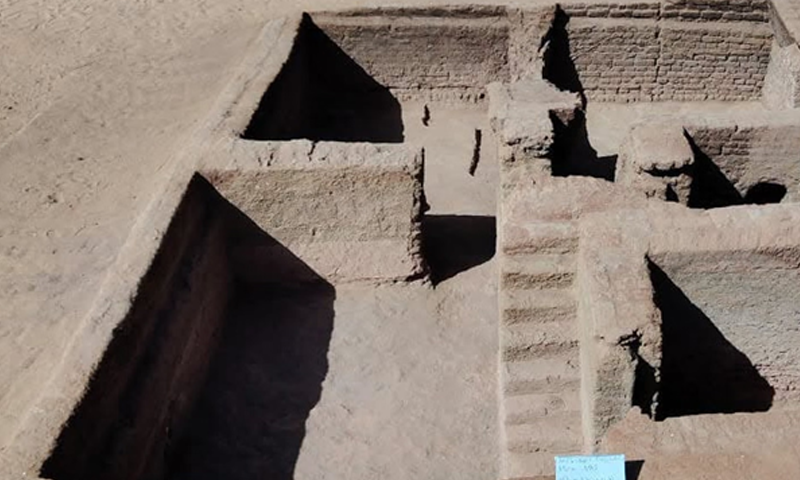
At the same site, experts have also discovered traces of an urban settlement dating back to the Byzantine period, including residential buildings, public squares, streets, and other structures, which indicate that the area was an organized and populated coastal city in its time.
According to the Ministry of Tourism and Antiquities, this is the 44th major archaeological discovery in Marina Al Alamein. The site was first discovered during construction activities in 1986, and has been the subject of ongoing research and excavations. According to experts, Marina El Alamein was an important commercial and residential centre on the Mediterranean coast during the ancient Roman and Byzantine periods.
On the other hand, archaeologists have also discovered an ancient settlement dating back to the 4th century AD near an oasis in Egypt’s Western Desert. Built of mud bricks, the settlement features a public square, residential buildings, a church, and a regular network of streets, indicating that it was an organized urban settlement of the time.
Read also: Egypt Win Penalty Thriller Against Australia