
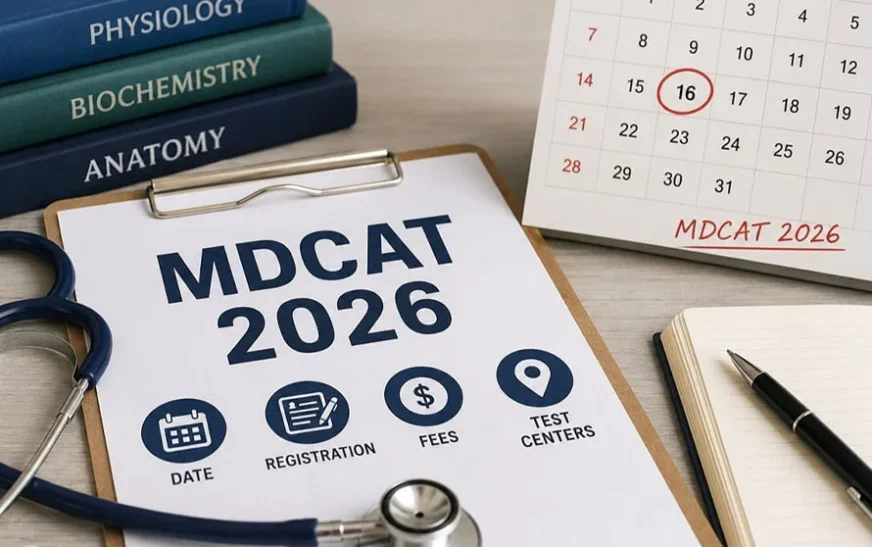
ISLAMABAD: The Senate health subcommittee on Tuesday discussed preparations, examination schedule, curriculum, registration process and admission policy for MDCAT-2026.
The convener of the committee, Senator Anusha Rahman chaired the meeting, while the meeting was also attended by Federal Health Minister Mustafa Kamal, the Pakistan Medical and Dental Council (PMDC) president and representatives of relevant institutions.
MDCAT 2026 exam would be held on August 16, shortly after the completion of intermediate examinations, PMDC officials told the committee. Officials said students in Azad Jammu and Kashmir had been given an additional three days to register because of internet connectivity problems.
More than 135,000 candidates had registered so far, the participants were informed that no complaint of a leaked MDCAT question paper had been received during last year’s examination. According to PMDC representatives, the MDCAT curriculum was developed by the National Medical and Dental Academic Board after consultations with subject experts, teachers, students and parents.
More than 1,000 parents submitted recommendations by email on the draft curriculum, officials said, adding that suggestions were incorporated at different stages of the review process. The curriculum will remain in force for two years, while its individual components will be reviewed every six months, the committee was told. Senator Samina Zehri raised concerns about differences between the A-Level and FSc curricula, saying students came from significantly different educational systems. Kamal said MDCAT questions were designed to provide an equal opportunity to candidates from both educational backgrounds.
He said the government would collect data from the previous five years to determine the proportion of A-Level and FSc students among the approximately 95,000 candidates who passed the admission test. Rahman also sought the names and details of members of a medical education assessment committee assisting the health minister. Kamal assured the panel that the information would be provided within 24 hours.
During the meeting, a committee member questioned why Pakistani students seeking medical education abroad were also required to pass MDCAT. The health minister replied this policy would be reviewed. Kamal told the committee that about 40,000 Pakistani students travelled abroad annually for medical education, spending more than $800 million. The panel also discussed the high cost of private academies offering MDCAT preparation courses. Rahman said families were forced to spend hundreds of thousands of rupees each year on coaching because of the pressure surrounding the examination.
Kamal described the private coaching industry as a “mafia” and said scheduling MDCAT soon after intermediate examinations was intended to reduce students’ dependence on academies. He said candidates had previously remained under pressure for several months while preparing separately for board examinations and MDCAT.
Read also: How Many Students Will Take MDCAT 2026?