
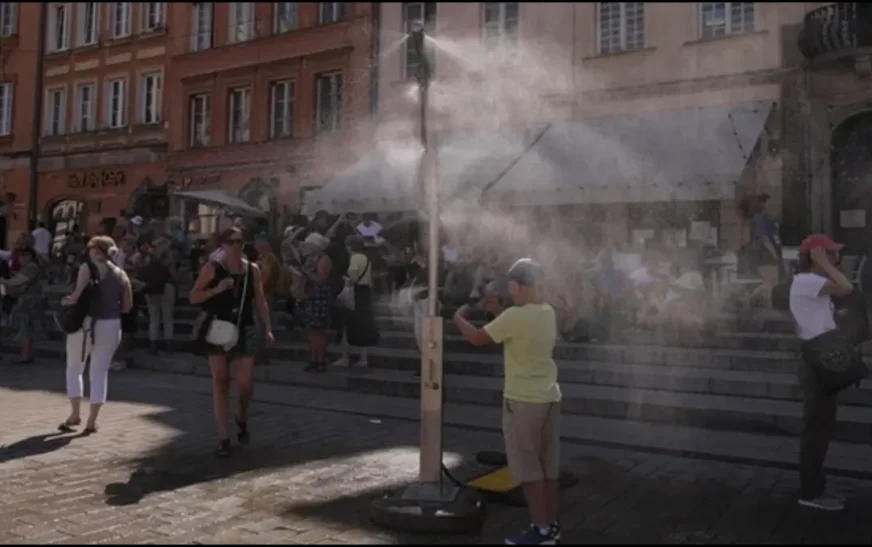
As a severe heatwave sweeps across Europe, international media reports confirms more than 1,300 lives have been claimed in a span of just four to five days. The vast majority of the victims are elderly citizens aged 65 and above.
The crisis, which began forcing the closure of museums, schools, and public spaces on June 20, has seen thermometers spike between 35°C and 40°C. While these temperatures are considered routine, everyday summer realities for billions of people in South Asia, that have triggered a public health emergency across the European continent.
Meteorologists and health experts point to a combination of four critical factors biological adaptation, architectural design, relentless nighttime temperatures, and humidity to explain why the exact same numbers on a thermometer yield such vastly different outcomes.
Biological Adaptation
In South Asia People living here have dealt with intense heat their whole lives. Their bodies have slowly learned how to handle it by sweating more efficiently and pumping blood better to stay cool. While in Europe People there are used to much cooler weather. When sudden 40°C heat hits, their bodies don’t know how to react. It puts a massive strain on their hearts, which is why it is especially dangerous for the elderly.
Infrastructure
In South Asia the houses are built to let heat out. They often have high ceilings, lots of windows for cross-breezes, and concrete or stone floors that stay cooler. But in Europe for hundreds of years, homes were built to keep freezing winter cold out and trap heat in. They have heavy insulation and thick walls. When a heatwave hits, these houses act like ovens, trapping the heat inside. Plus, very few homes in Europe have air conditioning.
Night Temperatures
In South Asia even after a scorching day, temperatures usually drop a bit at night, giving the human body a chance to rest, recover, and reset its internal temperature.
In Europe during these recent heatwaves, the nights aren’t getting cool. Because European cities are full of concrete and asphalt, the buildings soak up heat all day and radiate it back out all night. Without that nighttime break, people’s bodies are under constant stress for 24 hours straight.
Humidity
In South Asia: While it gets very sticky during the monsoon, a lot of pre-summer heat is dry, allowing sweat to dry up and cool you down.
Similarly in Europe when the air is highly humid (full of moisture), your sweat cannot evaporate into the air. It just sits on your skin. Since sweating is the body’s natural air conditioner, if the sweat can’t evaporate, your body temperature keeps rising like a boiling pot, leading to dangerous heatstroke.
Public health agencies across Europe continue to issue urgent advisories to vulnerable groups, urging citizens to check on elderly neighbors, seek out public cooling centers, and stay hydrated as emergency services remain on high alert.
Read also: Death toll reaches 1,300 as record-breaking heatwave grips Europe