

ISLAMABAD: The federal government has announced the complete removal of the 18 percent sales tax on the shipping industry, on Friday.
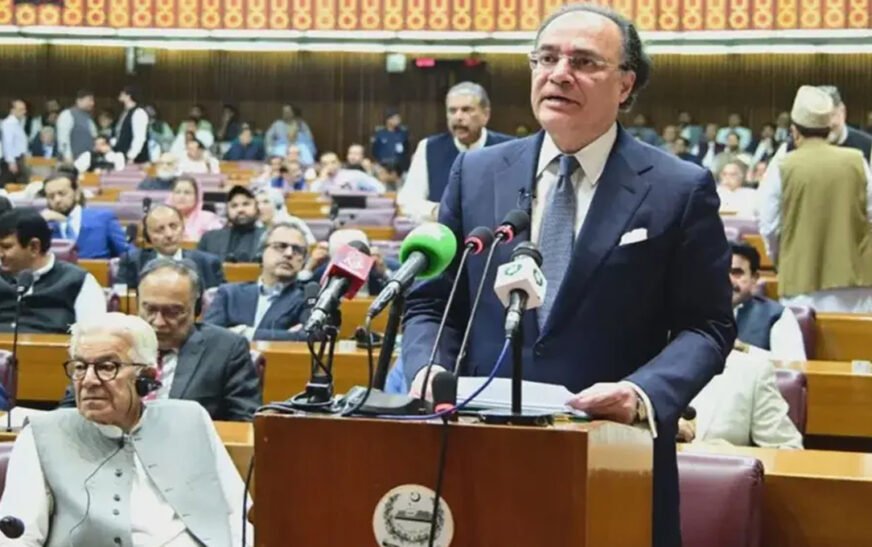
Finance Minister Muhammad Aurangzeb, while presenting the federal budget for the fiscal year 2026-27, said the decision aims to reduce business costs, encourage investment, and enhance Pakistan’s commercial activities both domestically and internationally.
“The abolition of sales tax on the shipping sector is a strategic step to support the logistics and maritime industries, lower operational expenses, and make Pakistan a more competitive player in regional trade,” Aurangzeb said.
Cancer Drugs Set to Become Cheaper as Govt Abolishes Customs Duty
The government has announced a major relief measure for cancer patients, proposing the complete removal of customs duty on raw materials used in the local production of cancer medicines as part of the Federal Budget 2026-27.
Finance Minister Muhammad Aurangzeb, while presenting the budget in the National Assembly, said the government is committed to making quality healthcare more affordable and accessible for the public. He stressed that cancer takes a serious toll on the finances and emotions of both the patient and his family, therefore the government is duty-bound to come up with ways of reducing its cost for the sake of affordability.
According to the National Tariff Policy 2025-30, customs duty on over 100 types of raw materials used in the production of cancer and other life-saving medicines will be removed, thus lowering the costs involved in manufacturing these medicines. This could further result in cheaper cancer drugs and medicines across the country.
Aurangzeb stated that the government wishes to promote local manufacturing through this move in order to reduce its dependency on importing medicine.
The decision is being hailed by healthcare experts and patient advocacy groups as a significant step toward reducing the economic burden of cancer treatment in Pakistan while supporting the growth of the local pharmaceutical industry.
Big Relief for Salaried Class as Government Cuts Income Tax Rates
Meanwhile, the government has unveiled significant tax relief measures for the salaried class as part of the new Budget 2026-27, aiming to ease the financial burden on middle- and upper-middle-income earners.
As per the latest announcement by the government, individuals having an annual income of between Rs2.2 million to Rs3.2 million would be taxed at 20% instead of 23%, while the income group of Rs3.2 million to Rs4.1 million would only be subject to 25% tax against the earlier 30%.
Similarly, people having annual incomes of Rs4.1 million to Rs5.6 million will pay 29% tax compared to 35%, while income earners from Rs5.6 million to Rs7 million would pay 32% against 35%.
The government has, however, decided to do away with the surcharge that was imposed on the salaried individuals previously.
According to ministry officials in the Finance Division, the new measure has been taken to improve the disposable incomes of salaried individuals, boost consumption, and spur economic growth.
Tax experts say the decision is a “big relief” for middle- and upper-middle-class Pakistanis, who have been bearing a heavy burden because of increased costs of living.
The new tax rates are expected to take effect immediately with the start of the new fiscal year, ensuring that salaried individuals benefit without delay.
The relief package also includes significant reductions for different monthly income levels. Individuals earning up to Rs50,000 per month are now fully exempt from income tax. Salaried individuals earning Rs100,000 per month will pay Rs500 in tax, down from Rs2,500.
Those earning Rs150,000 per month will face Rs6,000 instead of Rs10,000 in taxes, while a monthly income of Rs200,000 will now be taxed at Rs13,500 compared to Rs19,167 previously. Higher earners will also benefit, with Rs225,000 monthly income now taxed at Rs19,250, Rs250,000 at Rs25,000, Rs300,000 at Rs38,833, and Rs350,000 at Rs54,250. For top-tier salaries, Rs500,000 will be taxed at Rs106,750, Rs800,000 at Rs211,000, and Rs1 million at Rs307,000, down from Rs317,000.
Officials emphasized that the new tax rates take effect immediately with the start of the new fiscal year, ensuring that salaried individuals benefit without delay. The government said these measures will not only ease financial pressure on citizens but also reinforce a growth-friendly and equitable tax system.
The government has announced a significant increase in defense spending, allocating Rs3 trillion for the armed forces in the federal budget for the fiscal year 2026-27.
Finance Minister Muhammad Aurangzeb, while presenting the budget in the National Assembly, said the increase reflects the government’s commitment to strengthening national defense amid regional uncertainties and ensuring the country’s security remains robust.
He stated that the enhanced allocation aims to make Pakistan’s defense “unshakeable,” underscoring the importance of maintaining military readiness in a challenging geopolitical environment.
Aurangzeb Calls Operation Bunyan al-Marsous a “Bright Chapter” in Pakistan’s History
Federal Finance Minister Muhammad Aurangzeb hailed the success of Operation Bunyan al-Marsous as a historic achievement and a testament to Pakistan’s military strength and strategic importance.
The minister stated that the budget is being presented at a time when Pakistan has earned recognition on the global stage as a country whose voice is heard and whose friendship is sought. “This change did not occur by chance,” Aurangzeb said, referring to last May when India’s aggression was met with a decisive response from Pakistan, forcing international attention and compelling the adversary to return to dialogue within hours.
Aurangzeb described the success of the operation as the culmination of decades of professional training and preparation, calling it a “bright chapter in our national history.” He highlighted that the world now acknowledges Pakistan’s defensive capabilities, with several countries seeking to integrate Pakistani fighter jets into their air forces.
The finance minister also emphasized the economic benefits of the country’s defense industry, noting that it has become a valuable source of foreign exchange. He added that a strong defense not only ensures national integrity but also contributes to economic growth.
Aurangzeb concluded by stating that Pakistan’s defense strength has reshaped strategic partnerships both regionally and globally, reinforcing the country’s position on the world stage.