
Five hundred years ago, a 14-year-old boy walked out of a Kabul banquet hall alive while 700 of his tribe’s elders were slaughtered inside a hall by Ulugh Beg’s forces.
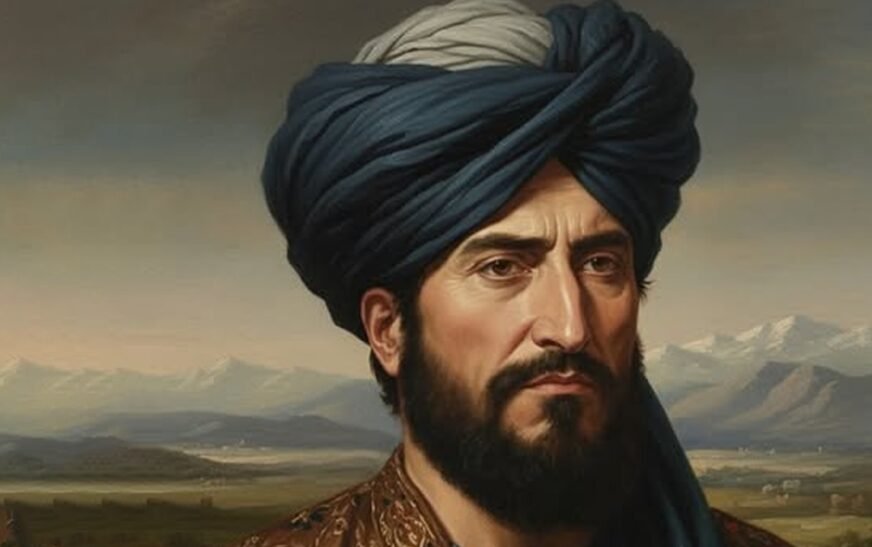
That boy was Malak Ahmad Khan Yousafzai. The trauma of that day in 1474 did not break him. It made him. He would go on to lead his scattered people across mountains and rivers, and by the time he died in 1530, he had laid the foundation of the Yousafzai homeland we know today as Swat, Dir, Buner, Malakand, and the Peshawar valley.
Born around 1460 in Kabul to Malak Sultan Shah of the Razar-Malakzai clan, Ahmad Khan grew up at a time when the Yousafzai were one of the most powerful Pashtun tribes around Kabul. Their influence worried the Timurid ruler Mirza Ulugh Beg. He invited the Yousafzai chiefs to Kabul under the guise of peace and had them killed at Siyah-sang.
Only Ahmad was spared, because his uncle Malak Suleiman Shah begged for the boy’s life in place of his own. The massacre forced the survivors to flee east. Ahmad Khan emerged from that exile as the tribe’s de facto leader.
The Yousafzai first took refuge with the Dilazaks in the Doaba area of Peshawar valley. Hospitality soon turned to hostility. Under Ahmad’s command, the tribe fought back, and in a long campaign lasting nearly twenty years, they pushed the Dilazaks across the Indus.
Local memory still links the start of that war to a matter of honour, but Ahmad turned it into a war for space to live. From there he turned north. In 1523 his forces secured Lower Dir after the Battle of the Dir Valley. Around 1520, he launched a surprise campaign into Swat against Sultan Awais Jahangiri Swati, a move sealed in part by a marriage alliance. One by one, Swat, Buner, Mardan and Swabi came under Yousafzai control. He established his headquarters at Thana in Malakand and ruled as chieftain from 1520 to 1530.
But Malak Ahmad was more than a conqueror. With his advisor Sheikh Mali, he set about making sure the land they had won would not tear the tribe apart. He introduced the wesh(land reform) system, a rotational method of dividing agricultural land among Yousafzai clans.
No single family could hold the best fields forever. The system rewarded those who had fought, kept rivalries in check, and gave the tribe a structure that outlasted any single leader. It is why, even today, Yousafzai communities from Yar Hussain in Swabi to villages in Buner and Dir still speak of fair shares and clan balance as part of their heritage.
Malak Ahmad died in 1530 in Malakand at the age of 70. His descendants, the Malakzai families of the Razar-Mandanr branch — Ahmed Khel, Aladad Khel, Juna Khel, Baba Khel, Sultan Khel and others spread far beyond his original territory.
Today you will find them not only across Khyber Pakhtunkhwa, but in Quetta, Loralai and Pishin, in Kabul and Laghman, in Hazara, Multan and Karachi, and even in Bhopal, Lucknow, Delhi and Pathankot.
In tribal memory, he is called Baba. Not because he ruled with an iron fist, but because he turned a refugee people into a nation with laws. He used the jirga as much as the sword. He understood that taking land was the first step, and keeping people united was the harder one.
In 2026, as debates about Pashtun identity and the future of the borderlands continue, the story of Malak Ahmad Khan still matters. He was a survivor of a massacre who refused revenge for revenge’s sake. He was a strategist who married diplomacy to warfare. And he was a law-giver who believed a tribe could only endure if its resources were shared.
Armies come and go, but nations remain by law. That was the lesson of Malak Ahmad Khan Yousafzai, the man who turned exile into empire, and whose name still echoes in the Hujra of Malakand and Swat.
Read also: Kalu Khan Yousafzi a great Pakhtun leader and symbol of resistance against Mughal army