
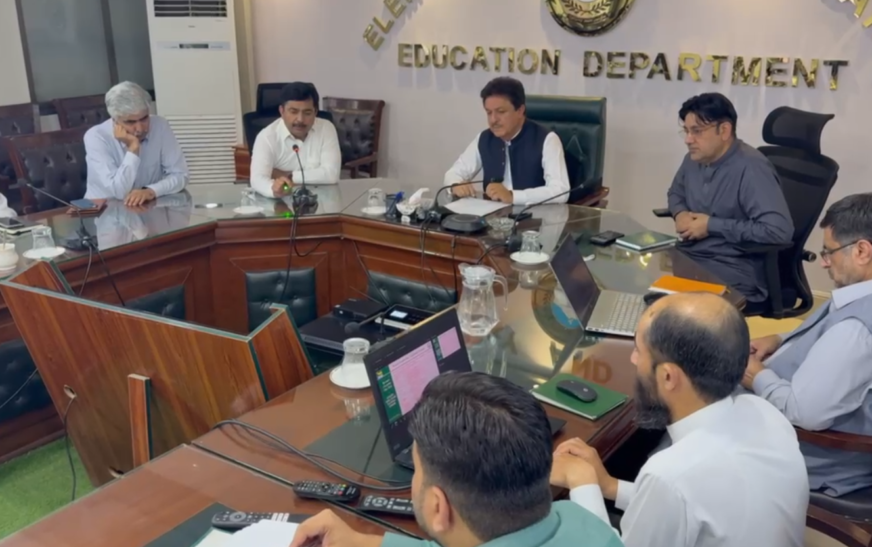
PESHAWAR (Salman Yousafzai): The Elementary and Secondary Education Department of Khyber Pakhtunkhwa (KP) has officially launched the “E-Transfer Plus Policy 2026,” marking a significant shift toward a fully digitised and merit-driven administrative framework. Education Minister Arshad Ayub Khan inaugurated the reformed system in Peshawar, stating that the primary goal is to ensure absolute transparency in teacher transfers while eliminating external interference and discretionary quotas.
A central feature of the new policy is the integration of a performance-based module. For the first time, a teacher’s eligibility for transfer will be directly influenced by their professional track record, including student academic results, classroom attendance, and school-based assessments. This data-driven approach aims to reward high-performing educators and ensure that school staffing is handled with accountability. The scoring system has also been refined to include the Student-Teacher Ratio (STR), the length of service tenure, and the specific academic outcomes of the schools where teachers are currently posted.
The reform package introduces mandatory online applications for transfers requested under special categories, such as those for widows, persons with disabilities, medical grounds, and spouse-based placements. To streamline inter-district movements, a digital No Objection Certificate (NOC) system has been established. Additionally, the department has announced that mutual transfers will now remain active throughout the year to provide greater flexibility for educators. To safeguard the integrity of the process, a strict two-year ban will be imposed on any individual found submitting fraudulent documentation.
To maintain the standards of this digital transition, the government has formed Oversight and Placement Committees tasked with monitoring the system’s performance and addressing grievances. These measures are part of a broader provincial effort to modernise the education sector, moving away from manual processing in favour of an automated system where merit and professional performance serve as the only criteria for career progression and administrative changes.