
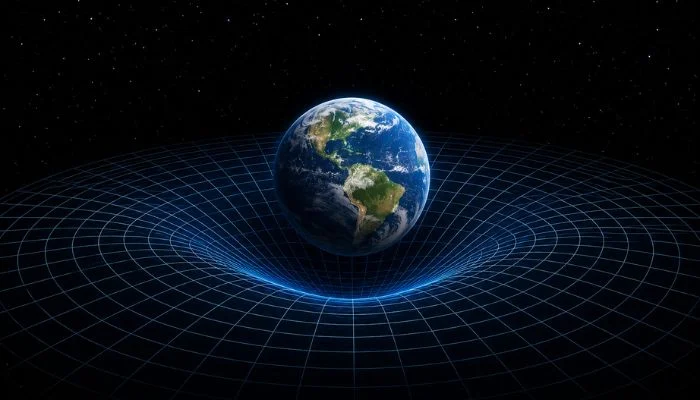
A day on Earth is commonly understood to last 24 hours, but the planet’s rotation is not perfectly constant and can vary by a few milliseconds, according to recent research.
Scientists have found that Earth has shown periods of slightly faster rotation in recent years, meaning some days can be a few milliseconds shorter than the standard 24-hour period.
Although these changes are extremely small, variations in Earth’s rotation have been recorded for decades. Researchers say several factors can influence the planet’s rotational speed, including movements within Earth’s interior, changes in the distribution of mass caused by melting ice and large-scale climate phenomena such as El Niño and La Niña.
Physicist Judah Levine of the National Institute of Standards and Technology said Earth’s rotation is currently speeding up in certain periods, raising the possibility that a negative leap second may eventually be required.
Until now, leap seconds have generally been added to clocks to keep atomic time aligned with Earth’s rotation. Scientists are now considering the possibility of removing a leap second instead, potentially as early as 2029.
Researchers say movement in Earth’s outer core may also affect the planet’s rotation. The outer core contains extremely hot liquid metal that is constantly in motion, and interactions between this material and Earth’s rotation can contribute to slight changes in the length of a day.
For the study, researchers used estimates derived from earthquakes between 1964 and 2019, along with models of the movement of liquid metal inside Earth, to reconstruct the interaction and examine its possible effect on the planet’s rotation.
Scientists caution that processes in the outer core are unlikely to be the only factor behind changes in the length of a day, with other internal and external influences also contributing. However, the research highlights the potential role of interactions involving Earth’s interior in these subtle variations.
Read also: China researchers assess risk of future conflicts spreading to Earth-Moon space