

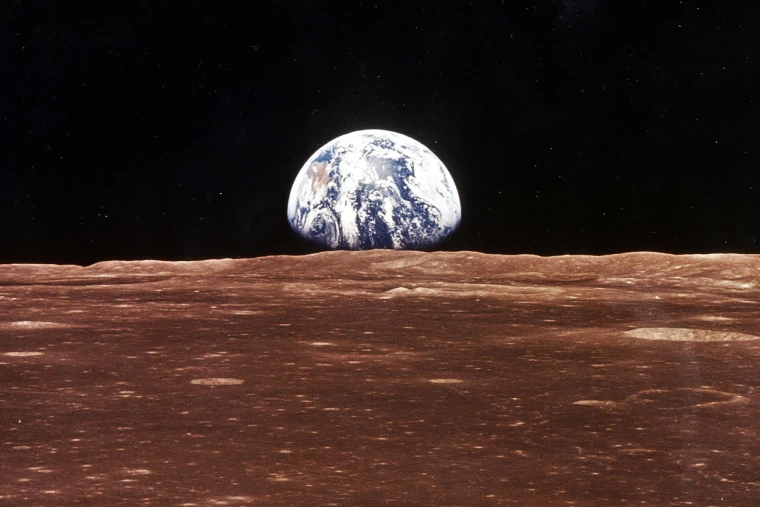
Chinese aerospace researchers have assessed the possibility that future conflicts could spread into the space between Earth and the Moon, with control of access to the region likely to become an important issue.
A study published in the Journal of Command and Control outlined possible scenarios in which rival spacecraft could chase or evade each other, avoid defensive systems and attempt to block important space routes.
Researchers said spacecraft could take advantage of the Moon’s complex gravitational environment to remain at certain positions and gain a sudden operational advantage against targets near Earth.
The study also identified choke points, where important or low-fuel space routes come close to each other. A country holding such positions could obstruct a rival’s route, force it to change course or delay a mission without direct confrontation.
The researchers said the importance of the region on the horizon would not be limited to control of individual spacecraft or specific routes. Overall control of access to space could become a major concern.
The study comes as the US, China, Russia, and private companies like SpaceX accelerate plans for lunar bases, Moon mining, and deep-space infrastructure. NASA’s Artemis program and China’s International Lunar Research Station both aim for sustained presence on the Moon by the 2030s.
Military analysts say that as activity increases, so does the risk that competition will move beyond Earth orbit. No country has yet deployed weapons in cislunar space, and the 1967 Outer Space Treaty bans weapons of mass destruction there. But the new research suggests the legal and strategic framework for this region is already being debated.
Read also: China discovers new treatment for cardiac patients













1 Comment
[…] Read also: China researchers assess risk of future conflicts spreading to Earth-Moon space […]