

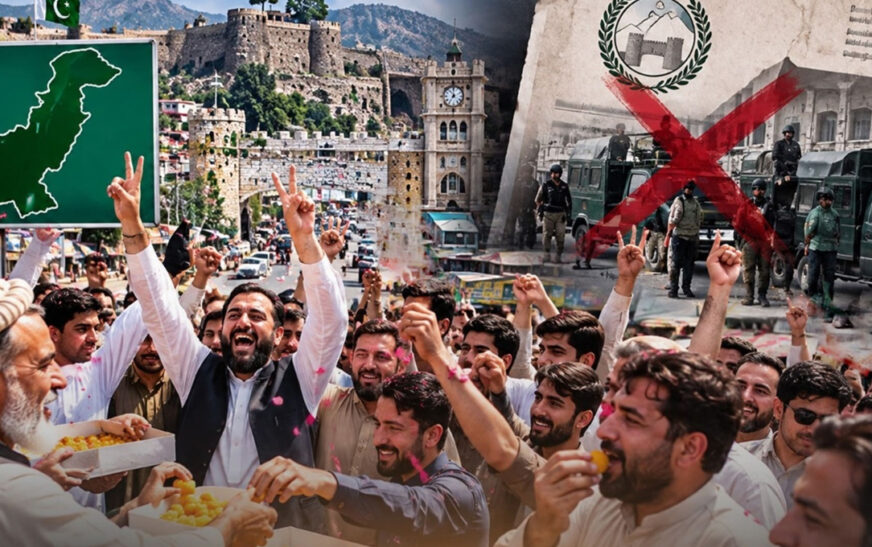
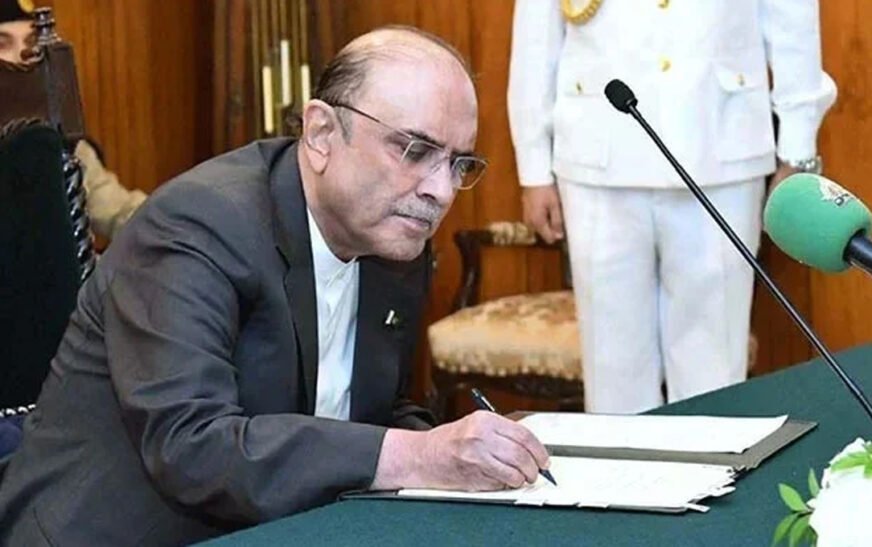
ISLAMABAD: President Asif Ali Zardari has signed the summary for the imposition of emergency and Governor’s Rule in Khyber Pakhtunkhwa under Articles 232 and 234 of the Constitution, citing a sharp increase in terrorist incidents and a deteriorating law and order situation across the province.
According to the presidential proclamation, the decision has been taken under Articles 232(1) and 234(1) of the Constitution and will come into immediate effect.
The proclamation states that an extraordinary rise in terrorist activities has posed serious threats to the lives and property of the people. An increase in attacks on government installations, critical infrastructure and law enforcement agencies has further aggravated the security situation, raising concerns over public safety and stability.
The presidential statement further alleges that the provincial government has failed to demonstrate the required commitment and take effective measures to curb terrorism and lawlessness.
A report submitted by the Governor of Khyber Pakhtunkhwa has also reportedly highlighted a breakdown of the constitutional system in the province and the provincial government’s failure to discharge its responsibilities in accordance with the Constitution.
President Zardari has described immediate constitutional intervention as necessary under the prevailing circumstances. Under the reported measures, the federal government will be empowered to direct the Governor of Khyber Pakhtunkhwa to assume responsibility for all or some of the functions of the provincial government.
The Governor will perform the responsibilities assigned by the federation, while powers exercised by provincial authorities and institutions, other than the provincial assembly, may also be exercised in accordance with federal government directives.
Under the reported proclamation, the powers of the Khyber Pakhtunkhwa Assembly will be exercised by Parliament or under its authority. The Chief Minister, provincial ministers, advisers, special assistants and Advocate General will cease to hold their offices with immediate effect.
Federal Government Cites Security Concerns
The federal government has reportedly described the emergency as a significant step towards controlling escalating terrorism and restoring law and order in Khyber Pakhtunkhwa.
The provided information also refers to the possible deployment of the armed forces under Article 245 of the Constitution to improve the province’s security situation.
Khyber Pakhtunkhwa has faced persistent challenges related to terrorism and lawlessness for several years. Terrorist attacks in different parts of the province have disrupted the lives of ordinary citizens, affected commercial activities and disturbed daily routines.
Numerous people, including civilians and personnel of the Pakistan Army, have lost their lives in these incidents. The continuing uncertainty surrounding security has also heightened public concern and created difficulties for communities, businesses and educational institutions.
The provincial government led by Pakistan Tehreek-e-Insaf (PTI) has faced criticism over its approach to counterterrorism and its handling of law and order.
The federal government’s reported decision is aimed at strengthening security arrangements, improving coordination among state institutions and ensuring the protection of citizens’ lives and property.
Political Coordination and Constitutional Measures
The decision has also increased the importance of consultations and consensus among political parties. Observers widely consider political cooperation and institutional coordination essential, alongside security operations, for addressing the complex challenge of terrorism.
According to the information provided, the federal government decided to impose the emergency following consultations with relevant stakeholders and approval by the federal cabinet.
The constitutional and administrative measures are expected to place renewed focus on the coordination of security policy, governance and law enforcement across the province.
However, the effectiveness of these measures will ultimately depend on their implementation, the ability of institutions to work together and the extent to which they improve security on the ground.
Public Awaits Lasting Peace and Stability
The people of Khyber Pakhtunkhwa have long been waiting for an end to insecurity and a return to normal life. Their key expectations include a reduction in terrorist attacks, protection for businesses and livelihoods, safer educational institutions and a stronger sense of security for their families.
Following the reported imposition of the emergency, a major question will be how the new administrative and security arrangements affect the daily lives of ordinary citizens.
For lasting peace, security operations will need to be accompanied by the restoration of normal life in affected areas, improved access to essential services, solutions to public grievances and protection of citizens’ constitutional rights.
The reported emergency marks a significant constitutional development in response to the serious security challenges facing Khyber Pakhtunkhwa. Nevertheless, the long-term success of the measures will depend on whether they lead to a meaningful reduction in terrorism and provide lasting relief to the population.
The federal government, provincial administration, security institutions and political parties will need to maintain effective coordination to achieve sustainable stability.
For the people of Khyber Pakhtunkhwa, the ultimate measure of success will not simply be a change in the administrative structure, but whether fear and uncertainty begin to recede, violence declines and normal life returns across the province.










1 Comment
[…] ALSO REA:D End of a 13-Year Dark Era? Emergency Move Sparks Hope and Debate in KP […]