

SINGAPORE: The price of crude oil shot up by 9 percent in the international market after US talks with Iran held in Islamabad did not yield any tangible outcome. The failure of discussions aimed at settling important matters like that of Iran’s nuclear ambitions has contributed to the rise in oil prices.
The prices of Brent crude oil increased to $103 per barrel, and WTI experienced a similar growth to $105 per barrel. Due to the current situation, there are many concerns related to future market development since the talks did not go well.
On the other hand, the price of the UAE’s Murban crude oil decreased slightly, which amounts to 1%. Currently, it is traded at a price of about $98 per barrel, which may be an encouraging sign amid all the problems associated with rising prices.
It seems that the reason for increasing prices is the fear of additional supply problems in the Middle East due to the existing stalemate. Thus, the instability on the market continues due to the lack of deals and the uncertainty of further steps to take.
Failure to conclude a bargain has raised queries concerning the possible future course of relations between the United States and Iran and the implications it might have on the global oil markets. Since both countries are still battling their suspicions, there is still a chance that no solution will be reached.
The emergence of these circumstances was amidst fears regarding the reliability of the supply of energy sources at a time when there are tensions in major shipping routes across the globe like the Straits of Hormuz. The repercussions will be felt in the oil markets until a resolution is made.
The case illustrates how geopolitical happenings influence the global energy market prices and hence the economy of the whole world.
US mulls limited military response to Iran after stalled talks, says WSJ
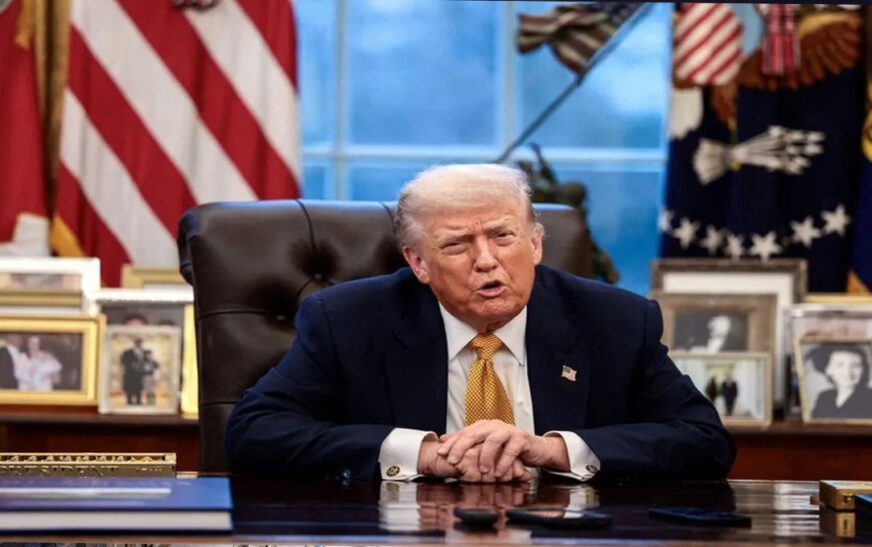
Meanwhile, in the wake of failed peace negotiations with Iran, President Donald Trump and his advisors are reportedly considering a limited military response, according to a report from The Wall Street Journal. The newspaper cites sources familiar with the situation, suggesting that the US may restart military action against Iran as a way to break the deadlock in the peace talks and exert pressure on Tehran.
Among other suggestions regarding how to deal with Iran, there was also the idea of blocking the Strait of Hormuz, an important waterway through which much of the oil travels. This suggestion came as a possible strategy that would help keep pressure on Iran while negotiating with it. Another possibility is the full-scale bombing of Iran, but the likelihood of it is quite low, as President Trump does not like getting engaged in a long conflict.
According to some sources, President Donald Trump still has the opportunity to start bombing Iran. However, he does not like getting into prolonged military operations, which is why he chooses not to engage in it.
According to The Wall Street Journal, another option being considered is for the US to temporarily enforce a blockade while pressing its allies to assume a permanent military operation guaranteeing the security of vessels traveling through the Strait of Hormuz. This strategy will help to transfer the responsibility of securing the vital passage from the US forces to its allies.
Moreover, The Wall Street Journal suggests that the persistent diplomatic deadlock between the US and Iran, alongside growing instability in the region, might pose serious implications for the overall situation. Although the military action is still an option available, it is yet to be determined what effect it would have on future peace processes, as well as whether the measures taken would result in wider military actions.
For some time now, the US and Iran have been involved in negotiations regarding the controversial issues between the two states, which include Iran’s nuclear program and its regional influence. Despite having numerous rounds of talks, the parties have yet to settle their differences. In addition, the US and Iran have accused one another of preventing the process from reaching a resolution.