
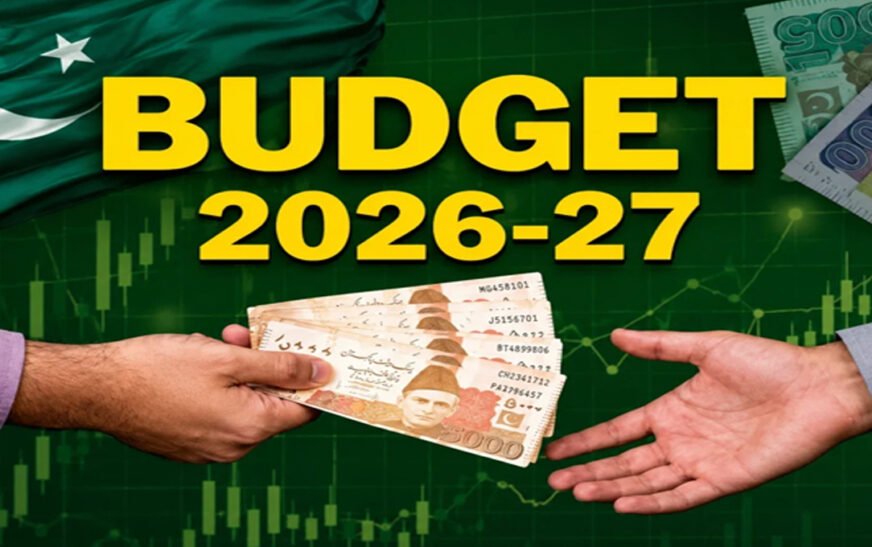
ISLAMABAD: Finance Minister Senator Muhammad Aurangzeb stated that there will be a 7 percent hike in salaries and pensions of civil servants and retirees while recommending a 10 percent rise in the lowest wage rate per month of the country.
The minister highlighted several key measures under the social protection framework, including the expansion of the Benazir Income Support Program (BISP). Under the revised plan, the BISP’s coverage will extend to 1.2 crore families, with additional educational scholarships for underprivileged students.
A total sum of Rs838 billion is being assigned for BISP in the upcoming budget session, which shows a 17 percent rise from the last budget session.
Regarding the regional development of the country, the minister allocated funds for Azad Jammu and Kashmir (Rs146 billion) and Gilgit-Baltistan (Rs88 billion) from the current federal budget program.
“These schemes will benefit social welfare of the country, poor and middle-class families, and regional development,” he said in a statement in the National Assembly.
These financial decisions will definitely prove helpful to the employees and pensioners of the country.
Big Relief for Salaried Class as Government Cuts Income Tax Rates
Meanwhile, the government has unveiled significant tax relief measures for the salaried class as part of the new Budget 2026-27, aiming to ease the financial burden on middle- and upper-middle-income earners.
As per the latest announcement by the government, individuals having an annual income of between Rs2.2 million to Rs3.2 million would be taxed at 20% instead of 23%, while the income group of Rs3.2 million to Rs4.1 million would only be subject to 25% tax against the earlier 30%.
Similarly, people having annual incomes of Rs4.1 million to Rs5.6 million will pay 29% tax compared to 35%, while income earners from Rs5.6 million to Rs7 million would pay 32% against 35%.
The government has, however, decided to do away with the surcharge that was imposed on the salaried individuals previously.
According to ministry officials in the Finance Division, the new measure has been taken to improve the disposable incomes of salaried individuals, boost consumption, and spur economic growth.
Tax experts say the decision is a “big relief” for middle- and upper-middle-class Pakistanis, who have been bearing a heavy burden because of increased costs of living.
The new tax rates are expected to take effect immediately with the start of the new fiscal year, ensuring that salaried individuals benefit without delay.
The relief package also includes significant reductions for different monthly income levels. Individuals earning up to Rs50,000 per month are now fully exempt from income tax. Salaried individuals earning Rs100,000 per month will pay Rs500 in tax, down from Rs2,500.
Those earning Rs150,000 per month will face Rs6,000 instead of Rs10,000 in taxes, while a monthly income of Rs200,000 will now be taxed at Rs13,500 compared to Rs19,167 previously. Higher earners will also benefit, with Rs225,000 monthly income now taxed at Rs19,250, Rs250,000 at Rs25,000, Rs300,000 at Rs38,833, and Rs350,000 at Rs54,250. For top-tier salaries, Rs500,000 will be taxed at Rs106,750, Rs800,000 at Rs211,000, and Rs1 million at Rs307,000, down from Rs317,000.
Officials emphasized that the new tax rates take effect immediately with the start of the new fiscal year, ensuring that salaried individuals benefit without delay. The government said these measures will not only ease financial pressure on citizens but also reinforce a growth-friendly and equitable tax system.