

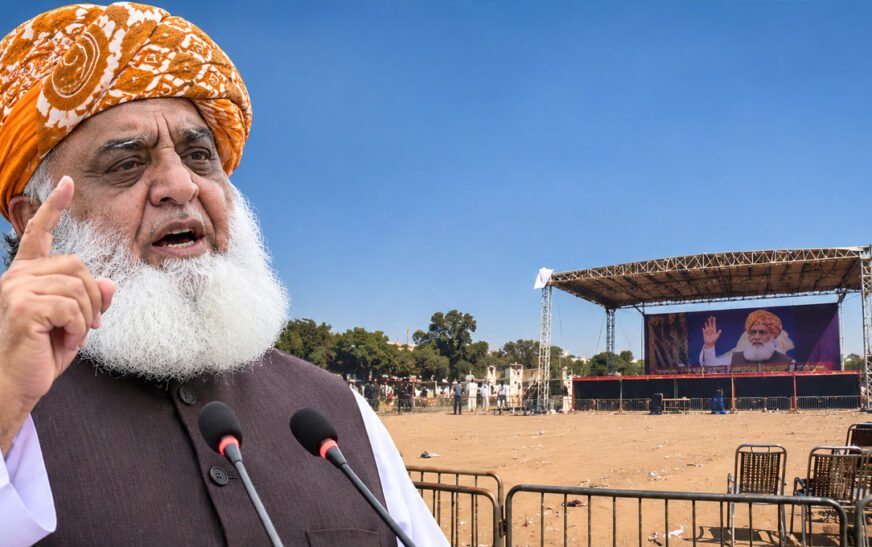
PESHAWAR: Jamiat Ulema-e-Islam-Fazl (JUI-F) chief Maulana Fazlur Rehman’s call for nationwide protests and road blockades failed to gain traction on Thursday, with roads remaining open, markets operating normally and citizens carrying on with their daily activities across Khyber Pakhtunkhwa and other parts of the country.
Despite announcing countrywide demonstrations and urging party workers to block highways and motorways over alleged arrests, detentions and restrictions linked to the Sargodha conference, Fazlur Rehman appeared unable to translate his political rhetoric into street mobilisation.
The JUI-F chief had accused authorities of arresting and detaining individuals in Sargodha, Khushab and other areas before calling on supporters across the country to take to the streets and shut down major roads.
However, the situation on the ground painted a very different picture.
Major roads in Lahore, Peshawar and various districts of Khyber Pakhtunkhwa remained open, traffic continued to flow normally, and businesses and markets operated without disruption. No widespread road closures or major demonstrations were reported in the areas covered by the report.
The response exposed the apparent gap between Fazlur Rehman’s ambitious protest announcement and his party’s ability to mobilise public support.
Public Unmoved as Questions Over Assets and Property Resurface
In Khyber Pakhtunkhwa, several political observers and citizens questioned the motives behind the protest call, arguing that it appeared to be an attempt to divert public attention from controversies surrounding personal properties, assets and alleged occupation issues involving the Mufti Mahmood Centre.
Critics maintained that attempts to turn these controversies into a nationwide political confrontation had failed to generate the desired public response.
Religious Circles Distance Themselves from Protest Politics
Adding to the setback, some religious scholars and representatives of religious circles reportedly expressed reservations about the protest strategy, arguing that poor madrassa students and ordinary religious workers had repeatedly been brought to the forefront of political demonstrations.
They questioned the practice of involving vulnerable students in political confrontations and suggested that religious institutions should not be used as instruments of political pressure.
According to critics, this time religious circles and madrassas did not respond to the call with the enthusiasm expected by the JUI-F leadership.
The lack of visible mobilisation has raised questions about the effectiveness of Fazlur Rehman’s protest politics and his party’s ability to bring people onto the streets.
For now, the streets remain open, businesses continue as usual, and the public appears more focused on its daily affairs than on responding to the JUI-F chief’s nationwide protest appeal.











1 Comment
[…] Jamiat Ulema-e-Islam-Fazl (JUI-F) is facing criticism over its call for road blockades, with political observers and members of the […]