
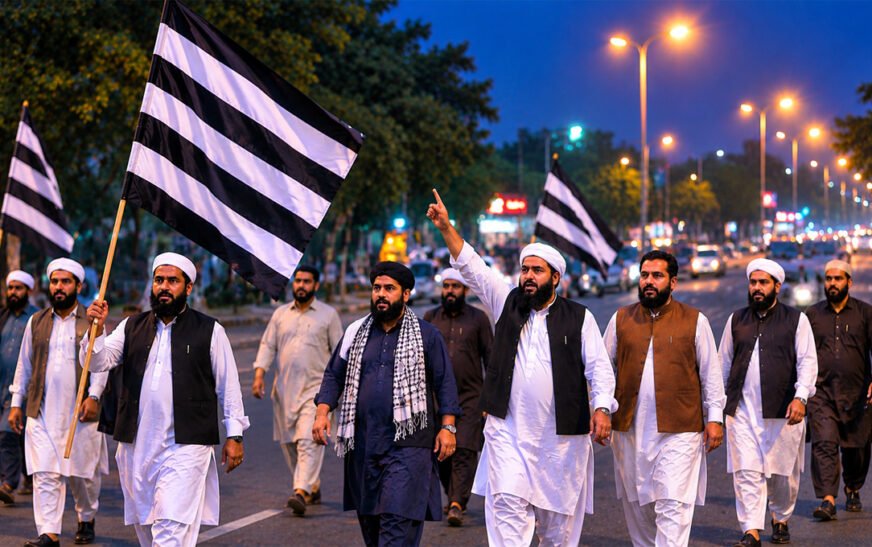
PESHAWAR: Jamiat Ulema-e-Islam-Fazl (JUI-F) is facing criticism over its call for road blockades, with political observers and members of the public questioning the party’s apparent shift towards the same protest politics it had previously condemned when adopted by Pakistan Tehreek-e-Insaf (PTI).
The party, which had strongly opposed PTI’s protest strategy in the past, accusing it of disrupting public life, damaging public infrastructure and wasting taxpayers’ money for political gains, now appears to be following a similar path by calling for road blockades that could cause serious inconvenience to ordinary citizens.
According to reports, JUI-F workers attempted to block a major highway in Khyber Pakhtunkhwa but failed to achieve their objective as the public response to the call by party chief Maulana Fazlur Rehman remained limited.
The development has triggered questions about the party’s political priorities and the rationale behind resorting to road-blocking tactics that directly affect the daily lives of commuters, patients, students, traders and other citizens.
Critics argue that political parties cannot condemn disruptive protests when their opponents organise them and then adopt the same tactics when they want to put pressure on the government. Such contradictory politics, they say, exposes the double standards of political leadership.
JUI-F had previously criticised PTI for allegedly using street protests to divert public attention from pressing national issues. However, its current strategy has raised questions about whether the party has abandoned its own principles and is now willing to put public convenience at stake for political objectives.
Citizens have questioned why ordinary people should be forced to suffer because of political rivalries and why highways and public roads should become instruments of political pressure.
Political analysts believe that public support cannot be secured through forced shutdowns, road blockades or disruption of routine activities. Instead, political parties should present their arguments through peaceful, democratic and constitutionally recognised channels.