
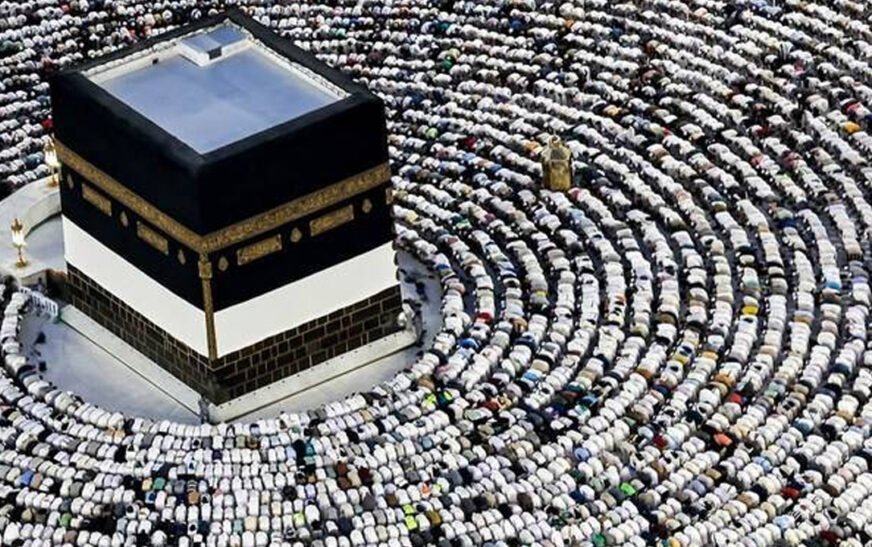
ISLAMABAD: The Government of Pakistan has introduced a new Hajj Policy for 2027–2030 aimed at modernizing pilgrimage management through digital services, long-term planning and greater private sector participation.
The policy, which covers the next four years, seeks to improve transparency, reduce costs, enhance service quality and provide pilgrims with a more efficient and convenient Hajj experience.
Under the new framework, the quota allocation between the government and private Hajj schemes will remain at 60 percent and 40 percent, respectively from 2027 to 2030. However, the federal cabinet will retain the authority to revise this ratio if necessary.
For the first time, intending pilgrims will be able to register for Hajj four years ahead of time for any particular year of Hajj. The applicants will be expected to deposit 10 percent of the total Hajj expenses at the time of registration. This selection will take place using a digitalized waitlist mechanism of “first come, first serve.”
Long-term contracts of three to four years will be established by the government for the provision of various services like accommodation, transportation, food arrangements, flights, and luggage. The officials have said that the move is aimed at better planning and provision of better services along with the reduction of costs.
Besides this, various Hajj packages of different durations will be provided by the government program in order to enable the pilgrims to pick according to their budget.
This policy requires the introduction of a digitalized Hajj management system that covers all the procedures like registration, payments, monitoring, complaints redressal, and evaluation after Hajj. The private Hajj operators will have to utilize the Hajj Management Portal for all the services.
According to the government, its future role will increasingly focus on regulation, oversight, and quality assurance rather than directly managing Hajj operations. Private sector participation is expected to expand gradually under the new framework.
Registration and licensing of private Hajj companies will be linked to their performance and compliance with prescribed standards. All financial transactions will be conducted through government-approved banking channels to ensure transparency and protect pilgrims’ funds.
The policy also requires that all procurement and contractual arrangements in both Pakistan and Saudi Arabia comply with applicable government regulations. Any unused balance remaining after the completion of Hajj operations will be refunded to pilgrims.
To strengthen accountability, the policy introduces independent third-party evaluations and audits of both public and private Hajj operations. A modern digital grievance redress system, supported by monitoring and a formal appeals process, will be established to address complaints promptly.
The government will also implement a merit-based selection process for Hajj support staff. Pilgrim training programs will be expanded to include Hajj rituals, the use of mobile applications, health and safety guidance, emergency preparedness, and awareness of Saudi laws and regulations.
The existing Hujjaj Protection Scheme will remain in place, providing financial assistance in cases of death, accidents, or emergency evacuation during the pilgrimage. An emergency management system and dedicated emergency response teams will also be established to handle unforeseen situations.
Officials said the Hajj Policy 2027–2030 has been aligned with Saudi Vision 2030 and international best practices to promote transparency, accountability, digital governance, and the delivery of high-quality services to Pakistani pilgrims.