
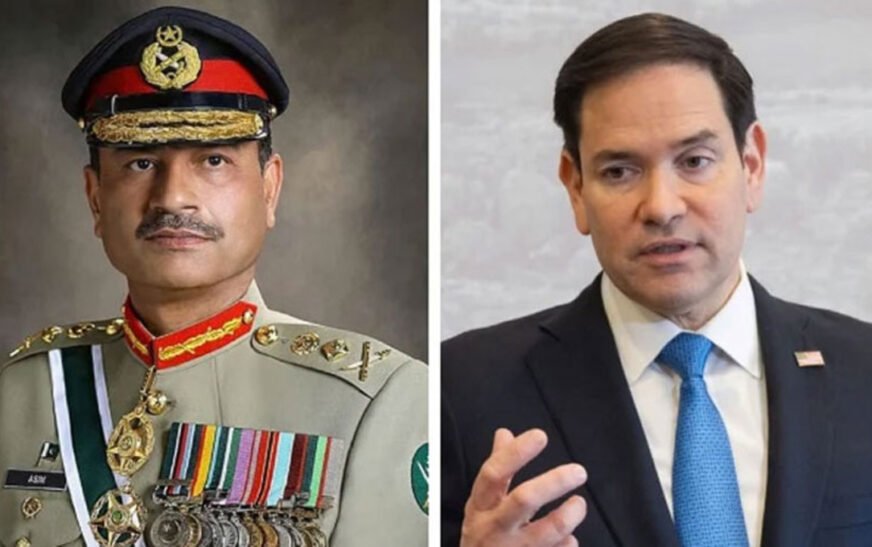
Field Marshal Asim Munir has been credited by multiple international outlets for maintaining communication between Washington and Tehran at a time when direct US-Iran contacts had broken down.
According to reports, Munir acted as Pakistan’s primary interlocutor, carrying messages between US and Iranian officials and participating in backchannel diplomacy that helped prevent a wider regional escalation.
US Secretary of State Marco Rubio publicly described Pakistan as the “primary interlocutor” between the two sides, noting that Munir remained in constant contact with Washington during the talks.
The mediation effort intensified after Pakistan hosted rare face-to-face US-Iran talks in Islamabad in April. Munir later traveled to Tehran, where he met senior Iranian officials including Interior Minister Eskandar Momeni. Iranian Foreign Minister Abbas Araghchi acknowledged Pakistan’s role, thanking Prime Minister Shehbaz Sharif and Field Marshal Munir for “tireless efforts to end the war in the region.”
Diplomatic sources say Munir’s visit to Tehran focused on securing an interim framework covering the Strait of Hormuz, maritime security, and steps toward resuming direct nuclear negotiations.
The US and Iran had reached a temporary ceasefire agreement in early April, with both sides later acknowledging Pakistan’s role in facilitating dialogue.Analysts note that Munir’s ties with both Washington and Tehran, built over years in intelligence and military roles, positioned him as a rare channel both capitals trusted to keep talks alive.
While progress remains limited on core issues such as Iran’s enriched uranium stockpile and US sanctions, officials on all sides describe the communication channel as critical to avoiding further military confrontation.
The mediation push comes as Pakistan balances its longstanding ties with Iran and Saudi Arabia while expanding counterterrorism cooperation with the United States.
Read also:Field Marshal Asim Munir holds informal meeting with Chinese PM Li Keqiang