
PESHAWAR: A three-day historic climate summit, “PEAK 2026,” organized by the bio-digital think tank Synapse Global in collaboration with Ayesha Foundation and with the support of the Youth Affairs Department and Culture and Tourism Authority Khyber Pakhtunkhwa, concluded successfully. The summit aimed to develop practical and effective policy recommendations to address the challenges of climate change and public health.
Held at the Bara Gali Summer Campus, the unique event brought together more than 200 talented students from across the province representing the fields of medicine, engineering, and data science. During the summit, a “Bio-Digital Climate Roundtable” was convened, where student leaders and senior medical faculty jointly drafted the historic “Bara Gali Accord.” The agreement called for the mandatory implementation of clinical green audits in hospitals and the establishment of climate-related disease registries. To oversee implementation, a dedicated “Synapse Vanguard” Task Force was also formed.
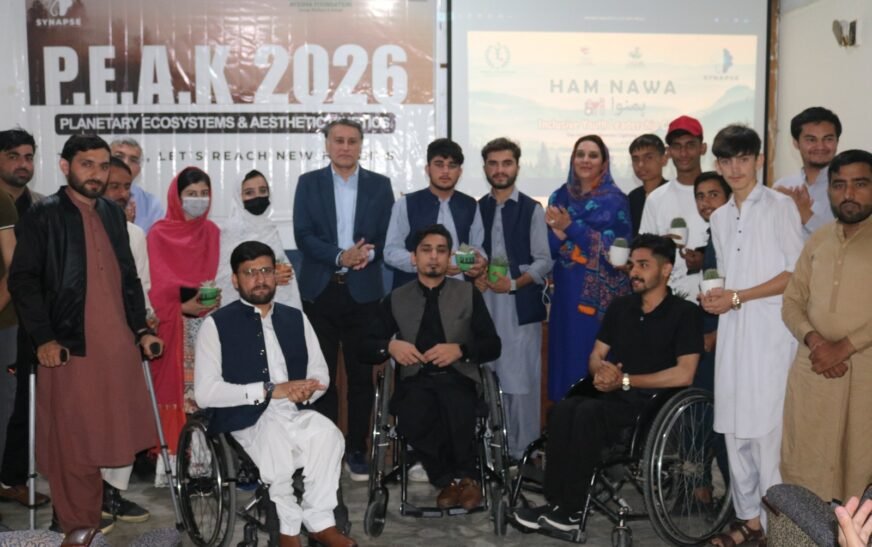
One of the summit’s most notable initiatives was “HumNawa – Accessible for All,” a program organized with the support of Ayesha Foundation to ensure the participation of students with disabilities and students from the merged districts. Participants engaged in eco-art, nature journaling, and various creative activities. In the Nature Art Competition, Adnan Khan, a student with hearing and speech impairment, secured first position, while Humaira Ghayas achieved second.
The event also featured lectures by Rizwan Ahmad, Deputy Director of the Special Education Complex Peshawar, along with Zabihullah, Habibullah, and Ali Talha, who spoke on the rights of persons with disabilities, mental health, climate change, and its impact on human health. The speakers emphasized that communities most affected by climate change must be actively included in environmental policymaking processes.
Throughout the three-day summit, participants took part in a wide range of academic, research, and creative activities, including research pitches, eco-drills, debates, exhibitions, and visual arts presentations. Through “X Studio” modules and a live art exhibition, the integration of clinical data and visual arts was showcased to communicate complex environmental concepts in innovative ways.
Addressing the closing ceremony, Ayesha Foundation Chairperson Tayyaba Batool praised the efforts of the students and reaffirmed the Foundation’s commitment to advocating for the rights, representation, and inclusion of persons with disabilities. She highlighted meaningful participation of persons with disabilities in climate-health discourse and future policymaking as one of the Foundation’s key priorities.
She also congratulated Synapse Global Chairman Ahad Nazir and his team on the successful organization of the summit and acknowledged the valuable support provided by the Youth Affairs Department and the Culture and Tourism Authority.
At the conclusion of the ceremony, Chairman Ahad Nazir officially announced “PEAK 2027,” expressing his commitment to organizing next year’s summit on a larger scale with broader objectives and more inclusive participation at Bara Gali.
Read also: Climate change fuels rising antibiotic resistance, study warns