
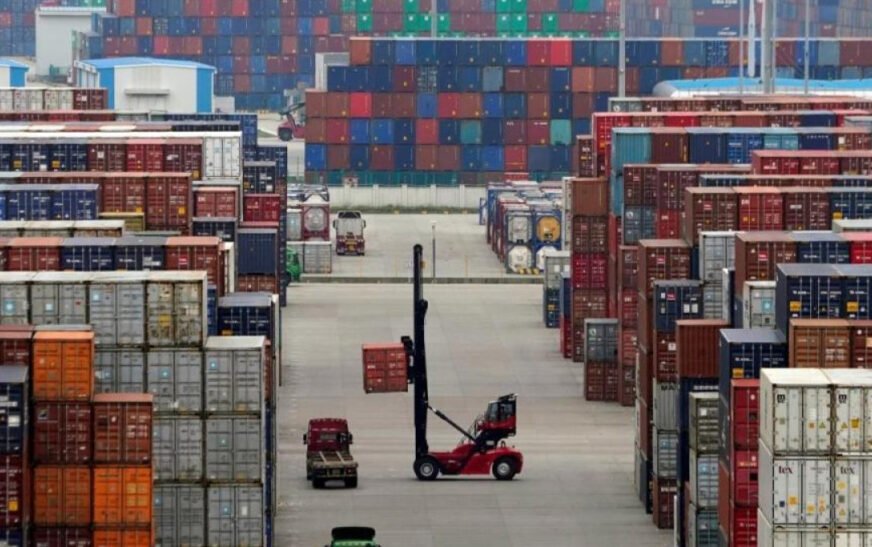
ISLAMABAD: The government has approved three major incentive projects worth about Rs 98 billion during the fiscal year 2027 to promote exports, while the total package is said to be worth more than Rs 255 billion.
Global rating agency S&P Global has upgraded Pakistan’s sovereign credit rating to B from minus B and declared its outlook stable, citing economic reforms, fiscal discipline, and an improvement in foreign exchange reserves with support from the IMF.
According to the decision of the Economic Coordination Committee (ECC), under the Export Finance Scheme, exporters will be provided with working capital loans at a fixed rate of 8.5% for six months, on which the government will provide a subsidy of Rs 58 billion in the fiscal year 2027.
Similarly, under the Long-Term Export Growth Financing Facility, loans of up to Rs 350 billion will be provided for new industrial projects and the purchase of modern machinery.Despite regional uncertainty due to US-Iran tensions, Pakistan’s economy has shown positive progress.
The borrowers will be charged an interest rate of 2% for the first two years and 5% for the next eight years, while the government will bear the remaining interest. Those who export up to 10% more than the previous year will be given one percent of the additional export value, while those who increase by more than 10% will be given a two percent incentive amount. It is estimated that about Rs 15 billion will be spent on this scheme annually.
The budget for fiscal year 2027 also provided several facilities to the export sector. According to experts, the government has shifted resources towards the export sector by eliminating incentives given to remittances, which is expected to increase industrial production, employment, tax collections, and permanent foreign exchange earnings.
According to the report, Pakistan’s economy still depends on the IMF program, financial support from China and Saudi Arabia; therefore, a significant increase in exports and foreign direct investment (FDI) is inevitable for sustainable economic stability.
Experts say that the government has provided cheap financial facilities, tax relief, and other incentives to the export sector. Now it is the responsibility of exporters to ensure access to new markets, value addition in products, and a significant increase in exports, so that Pakistan can reduce its dependence on IMF programs and external financial assistance in the future.
Read also: Pakistan’s mango exports drop 30pc