

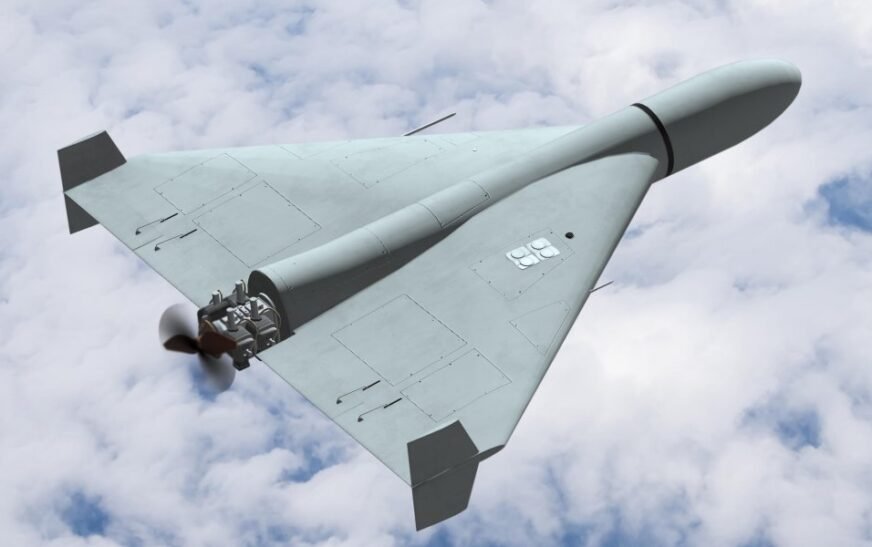
Since late 2022, the suicide drones ‘Shahed-136’ and their Russian version ‘Geran-2’ have become the Russian military’s most important and widely used weapon for striking distant targets in Ukraine.
But it now appears that the era of these drones is coming to an end, because jet-engine-powered drones are rapidly entering the battlefield. They are much harder for Ukraine’s air defence systems to intercept and shoot down.
Russia has also used these drones to disrupt activities at Ukrainian ports on the Black Sea coast. According to the Ukrainian Air Force, in the recent attack on Kyiv, more than half of the drones used by Russia for the first time were jet-engine-powered.
On the night of August 4-5, Russia launched 115 attack drones toward Ukraine. Ukrainian forces were able to hit and neutralize about 85% of them.
The next day, Russia sent 101 reconnaissance drones, more than half of which were jet-engine powered. However, the Ukrainian forces’ success rate in stopping these drones dropped to 65%. Russia is actually developing new versions of Shahed drones to counter a major shift that emerged during 2025 and 2026.
During this period, Ukraine had increased its success rate in intercepting and shooting down Russian attack drones to 90-95%. One major reason for Ukraine’s success was the rapid growth of the interceptor drone industry used to shoot down enemy drones.
The switch from slow, noisy gasoline-powered Shahed-136s to fast, jet-powered AI-equipped drones is making Russia’s drone campaign more effective and harder for Ukraine to defend.
Read also: Iran urges UN Security Council to condemn deadly US attack on wedding ceremony