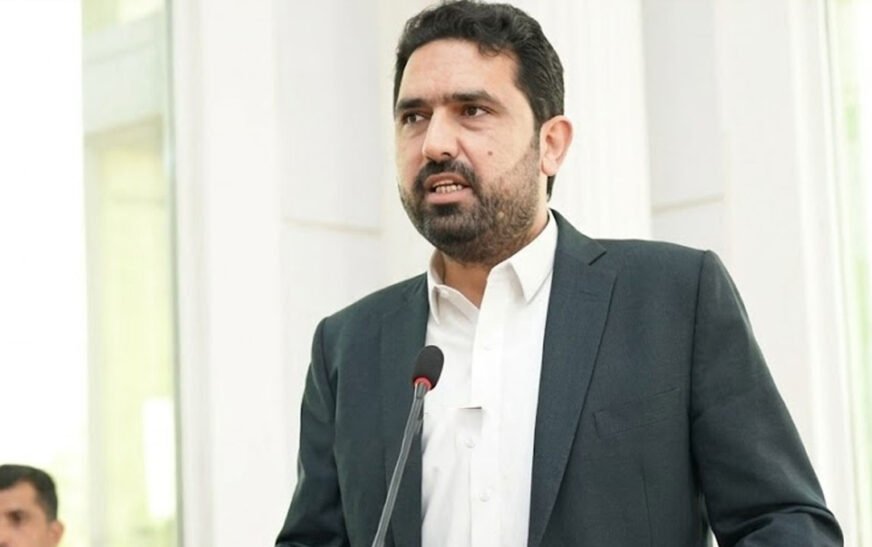

ISLAMABAD: Federal Petroleum Minister Ali Pervaiz Malik has said that the petroleum levy is currently being collected at around Rs 80 per litre.
Addressing a meeting of the National Assembly Standing Committee on Petroleum, Malik said regional tensions had triggered a supply crisis, affecting the availability of crude oil in international markets.
He added that the prices of diesel have reached new heights in the history of global economy and admitted that it is very difficult for people to cope with increasing fuel prices.
According to Malik, the petroleum levy comes under non-tax revenue that does not need a vote from parliament. Furthermore, the ministry cannot change the levy target without consultation with their multilateral partners.
The minister further informed that the price of petroleum is being transferred to consumers with full transparency. He also informed that the agreement for the supply of Euro-5 fuel has been made with four out of five refineries of the country.
Furthermore, the petroleum minister said that the government will adopt zero tolerance policy regarding the smuggling of petroleum products.
Petrol Prices Could See a New Relief Mechanism — Here’s the Plan
Earlier, the government has received key recommendations on how to deal with the impact of rising and volatile petroleum prices, including a proposal to avoid establishing a dedicated price stabilization fund.
According to sources, an important meeting was held to discuss measures to protect consumers from sudden increases in global petroleum prices and potential price shocks.
During the meeting, officials reviewed the idea of establishing price stabilization funds and examined similar mechanisms used at regional and international levels.
The committee noted that such funds had repeatedly failed to provide effective protection during major global market crises. It also observed that some models considered successful by the International Monetary Fund (IMF) had not remained effective during severe market disruptions.
Instead of creating a price stabilization fund, the committee recommended adopting a strategic approach to manage price volatility and supply shocks.
The meeting also considered several alternative measures, including targeted cash subsidies for consumers and increasing the country’s strategic oil reserves to cushion the impact of sudden price increases.
According to sources, concerns were also raised that establishing a price stabilization fund could affect sectoral liquidity, limit profit margins and potentially worsen the circular debt crisis in Pakistan’s oil sector.
The committee maintained that a government-backed price stabilization fund may not be effective under a deregulated pricing system. It therefore recommended exploring alternatives such as increasing oil reserves and providing targeted cash assistance to vulnerable consumers.