
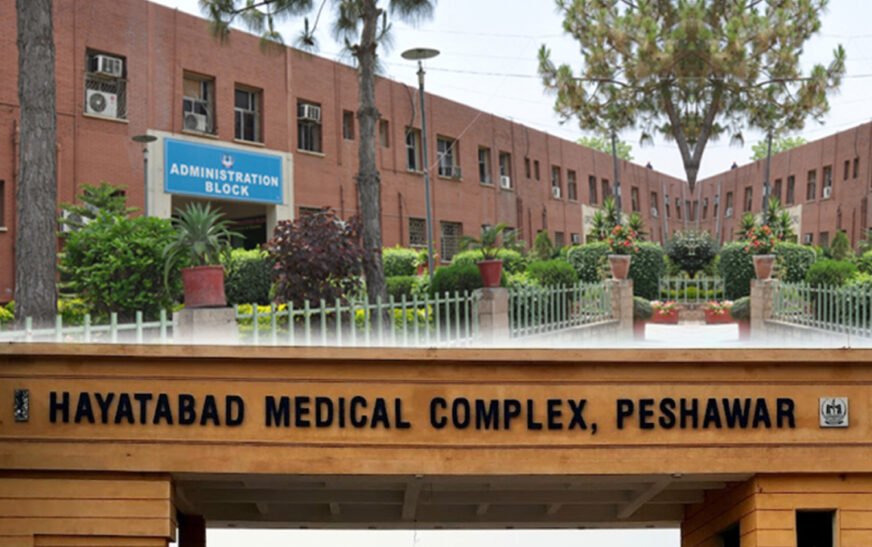
PESHAWAR: An inquiry into the affairs of the Fair Price Pharmacy at Hayatabad Medical Complex (HMC), a Medical Teaching Institute, has identified an overall financial loss of approximately Rs 3.74 billion.
The inquiry report raises several serious questions regarding financial irregularities, weak administrative and financial controls, and procurement procedures.
According to the report, administrative, procurement, and financial control issues in the Fair Price Pharmacy had persisted for a long time. From the establishment of the pharmacy until the appointment of a Chief Internal Auditor, no regular internal audit of its financial matters was conducted.
The inquiry was launched on May 16, 2026, by the hospital director following the 51st meeting of the MTI-HMC Board of Governors. A five-member inquiry committee headed by Finance Director Ikramullah Jan reviewed records from the Hospital Management Information System (HMIS), purchase orders, supplier invoices, payment vouchers, bank statements, tender documents, inventory records, and medicine usage records.
How the Pharmacy Became a Major Source of Expenditure: The report states that the Fair Price Pharmacy was approved in November 2016 as a retail and over-the-counter facility to provide medicines to the public at reasonable prices.
Later, it became the main source for purchasing and supplying medicines and medical items for patients under the Sehat Sahulat Program. The committee noted that this shift replaced the hospital’s regular tender-based procurement system. The Standard Operating Procedures drafted in 2016 lacked proper safeguards for demand planning, competitive procurement, segregation of duties, pre-qualification of suppliers, financial authority, and internal audit. Financial Figures:
As of June 10, 2026, the committee identified: Rs 2.76 billion+ in receivables Approx. Rs 347 million in bank balance Approx. Rs 1.43 billion in payables. After accounting for medicine usage under Sehat Sahulat Program, direct payments to the Fair Price Pharmacy, and internal fund transfers, the committee calculated a net financial loss of about Rs 3.57 billion.
Including related expenses, the total financial loss reached approx. Rs 3.74 billion.Payments and Fund Transfers: The committee reviewed payments from September 2022 to May 2026.
During this period, total payments of Rs 4.57 billion were made, with over Rs 4.1 billion paid through the Sehat Sahulat Program account. Bank records show that at least Rs 1.77 billion was transferred from other institutional accounts to the Sehat Sahulat Program account.
This amount was used to pay the pharmacy’s suppliers. However, the committee could not find documentary evidence of approval from the Board of Governors or the competent authority for these transfers. Records before September 2022 were largely unavailable, raising concerns that the actual financial loss could be even higher.
The report also flagged procurement violations. In FY 2022-23 there were 44 cases, in 2023-24 there were 54 cases, and in 2024-25 there were 19 cases where items were purchased from suppliers other than the lowest acceptable bidders, without proper technical justification documented.
The committee reviewed the role of a senior doctor who simultaneously served as Chairman of the Pharmacy and Therapeutics Committee and Head of Pharmacy.
The officer had authority over approval of drug brands, verification of supplier invoices, signing of cheques, and approval of the cash register. The committee held the officer primarily responsible for alleged improper procurements and unauthorized payments.
In his defense, the officer stated that his responsibilities, including bank signatory authority, were formally assigned through Board resolutions and were given after the illness and later death of the former Chief Pharmacist with Board approval.
The report also noted that until September 2022, the Finance Department was not involved in the financial management and payment process of the Fair Price Pharmacy, which undermined the Finance Director’s statutory oversight role.
The inquiry committee recommended strengthening administrative oversight, clear segregation of duties in procurement and payments, restoring Finance Department oversight, improving HMIS controls, conducting regular internal audits, reforms in procurement procedures, and fixing responsibility of relevant officers under the law.
The committee also expressed concerns over missing patient medical files. It stated that records of several patients were lost or destroyed and there was no proper system for record preservation, retrieval, and recovery.
Under the MTI Act 2015, the committee held hospital directors of different periods, as Principal Accounting Officers, primarily responsible for failing to establish effective administrative oversight and internal controls. An HMC administrative official said the inquiry was initiated by the hospital director, but the report was sent directly to the Board of Governors. Attempts were made to get HMC administration’s stance on the report’s findings, but no response was received. Let me know if you want this shortened into a 3-paragraph news brief as well.
Read also: Peshawar: HMC Nurse Dies in Suspected Suicide at Hayatabad Home