
QUETTA: Pakistan’s security forces and intelligence agencies have severely crippled the operational and command structure of foreign-funded terrorist networks in Balochistan. Dubbed “Fitna al-Hindustan” (FAH) under official state designations, these hostile proxies have suffered immense casualties following their failed strategic offensives.
On January 31, 2026, terrorists launched a heavily publicized, coordinated offensive termed “Operation Herof 2.0” across multiple districts. The primary objective of the hostile network was to orchestrate high-profile optics to signal a false sense of control over the province to international audiences.
However, the state’s retaliating forces completely neutralized the plot. The multi-day counter-offensive resulted in 344 terrorists killed and hundreds of others critically injured, marking a catastrophic battlefield defeat for the militant network.
Following the debacle of Herof 2.0, surviving militants have abandoned large-scale conventional confrontations. Capitalizing on Balochistan’s vast, rugged terrain, scattered population, and extensive highway networks, FAH remnants are now operating in small pockets.
Security briefings indicate that terrorists are moving in the guise of local shepherds and civilian populations, utilizing unmanned, remote mountain tracks to avoid detection. These cells carry out low-level sabotages, film the acts, and use heavily manipulated propaganda on digital media platforms to project minor actions as major strategic successes. State institutions have noted that these tactics rely entirely on digital optics with zero ground-level results.
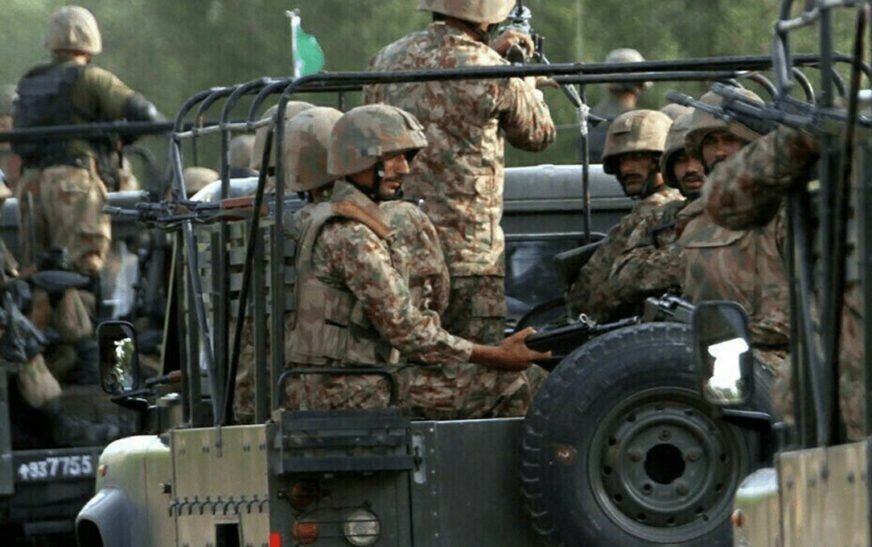
In response to these asymmetric tactics, government institutions and security forces have dramatically increased the operational tempo. Currently, more than 200 Intelligence-Based Operations (IBOs) are being executed daily across Balochistan to hunt down remaining sleeper cells.
In the last 48 hours alone, aggressive counter-terror sweeps have successfully neutralized more than 45 FAH terrorists. Over the last five months, more than 600 terrorists have been eliminated. This includes the complete decapitation of the
To permanently secure the vast landscape, the state is rapidly fast-tracking the capacity building of local law enforcement. The erstwhile Levies forces are being aggressively trained and integrated into the Balochistan Police framework to ensure robust, localized policing. Simultaneously, advanced technical and aerial surveillance grids have matured, allowing security agencies to monitor unmanned border routes and vulnerable communication lines with high precision.
Losing ground militarily, FAH has shifted its focus to soft, non-combatant targets out of sheer frustration. This includes torching commercial cargo trucks, looting local civilian banks, and abducting daily-wage laborers.
Crucially, while the proxy network previously claimed to protect local interests, their increasing desperation has seen them turn directly against the Baloch people. The recent high-profile abduction of the Vice-Chancellor of Gwadar University is cited as a prime example of their growing hostility toward the local intelligentsia and civilian population.
These anti-civilian and anti-development acts have significantly dented the credibility of FAH within the province. Public sentiment has sharply turned against these networks, as evidenced by overwhelming local participation in the state’s socio-economic engagement programs, the Balochistan Sustainable Development Initiative (BSDI), and large-scale pro-Pakistan public rallies.
On the geopolitical front, Pakistan’s enhanced diplomatic footprint has unnerved foreign adversaries, led by hostile intelligence alliances. Officials view the concurrent media tirades and digital propaganda campaigns against Pakistan as a coordinated effort by external actors to discredit the state globally while attempting to embroil it domestically through paid proxy networks like FAH and associated factions.
Security high commands and government officials have reiterated that the state remains fully prepared to dismantle these hostile designs. With verified intelligence, optimized logistics, and absolute clarity on the enemy’s methods, law enforcement agencies have reaffirmed that operations will not cease until total peace is restored and the enemies of Pakistan’s sovereignty are completely eradicated.
Read also:33 Fitna-ul-Khawarij militants killed in intelligence-based operation in Quetta