
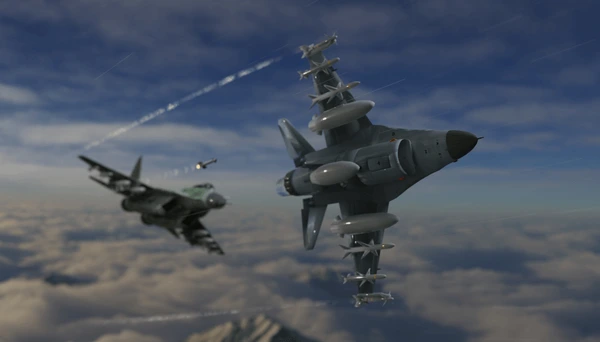
What is Dogfight and how the term get popular after May 07?
The term originated during World War I, because the engines were loud and the planes were constantly circling and “snapping” at each other’s tails in a frantic, noisy scramble, observers compared the sight and sound to a pack of dogs fighting in the street.
It is a manoeuvre used to prevent “overshooting” flying past the enemy by trading airspeed for altitude and then diving back down. On May 7, 2025, a massive aerial confrontation occurred between India and Pakistan, which is now cited by many military analysts as one of the largest beyond-visual-range (BVR) dogfights in modern history.
Today, May 7, 2026, marks the first anniversary of that event. Here is a breakdown of what happened during the conflict, often referred to as “Operation Sindoor” by India and part of “Marka-i-Haq” by Pakistan.
The battle was unprecedented in the 21st century due to the number of advanced aircraft involved and the lack of traditional “close-quarters” manoeuvring.
Reports indicate approximately 114 to 125 aircraft were in the air simultaneously (roughly 72 from the IAF and 42 from the PAF). The engagement lasted approximately 52 to 59 minutes.
BVR Combat: Unlike famous dogfights of the past, this was almost entirely a long-range missile battle. Pilots engaged targets from over 100 km away using advanced missiles like the Chinese-made PL-15 (Pakistan) and the European Meteor (India).
The conflict was sparked by rising tensions following an attack on tourists in Pahalgam in late April.India launched missile and air strikes targeting infrastructure in Pakistani-administered Kashmir and Punjab. As Indian jets (including Rafales, Su-30MKIs, and MiG-29s) approached, the Pakistan Air Force (PAF) responded with JF-17 Block IIIs, F-16s, and J-10Cs.
The PAF claimed to have downed five to seven Indian aircraft, including three Rafale jets. They later released purported cockpit audio and coordinates of crash sites.
India initially remained silent on specific losses, though independent reports and satellite imagery later highlighted the loss of at least one Rafale (serial number BS-001). Pakistan utilized a “Tactical Masterclass” approach, using AEW&CS (Airborne Early Warning and Control) aircraft to lure Indian jets into a “kill zone” without crossing the border.
This dogfight is considered a turning point in military aviation for several reasons, The battle was defined by high-level jamming, radar neutralization, and network-centric warfare rather than pilot acrobatics.
The intensity of the May 7 clash led to immediate international pressure, resulting in a ceasefire on May 10, 2025, following U.S. intervention. While both nations have different narratives regarding the outcome, the event remains a significant case study for air forces worldwide regarding the effectiveness of modern long-range missile systems.
In the simplest terms, a dogfight is a form of aerial combat between fighter aircraft at relatively short ranges. It is the airborne equivalent of a “close-quarters” duel. While the term conjures images of pilots spiraling around each other trying to get a lock, the nature of dogfighting has changed dramatically since its inception.
The Evolution of the Dogfight
The definition has shifted as technology has advanced. Military analysts generally categorize aerial combat into two types While Top Gun-style dogfighting is what most people imagine, most modern aerial victories happen before the pilots ever see each other with their own eyes. Today, a “dogfight” is often a battle of sensors and stealth rather than just acrobatics.
When it started between Indian and Pakistan
The conflict that led to the May 7 dogfight began approximately two weeks earlier, following a specific catalyst that broke a period of relative calm between the two nations. Today, May 7, 2026, marks exactly one year since that escalation peaked. Here is the timeline of how it started:
The friction began on April 22, 2025, after a terror attack in Pahalgam, Indian-administered Jammu and Kashmir. New Delhi blamed Pakistan-based militant groups and immediately took non-military punitive measures, including suspending the Indus Waters Treaty, closing the Wagah-Attari border, and ordering the shutdown of the Pakistan High Commission.
Tensions shifted from diplomatic to military in the early hours of May 7. Between 1:05 AM and 1:30 AM on May 7, the Indian Air Force (IAF) launched missile and air strikes against nine locations it identified as militant infrastructure in Pakistani-administered Kashmir and Punjab (including Muridke and Bahawalpur).
Pakistan viewed these strikes as an act of aggression against its sovereignty. Within hours, the Pakistan Air Force (PAF) launched a counter-operation, leading to the massive aerial engagement often called the “May 07 Dogfight.”
The two countries refer to the period starting from this date by different names,In Pakistan: It is officially commemorated as “Marka-i-Haq” (The Battle of Truth).
The active military phase was intense but brief. Following the May 7 dogfight and subsequent exchanges of artillery and drone strikes, international pressure (primarily from the U.S.) led to a ceasefire on May 10, 2025.
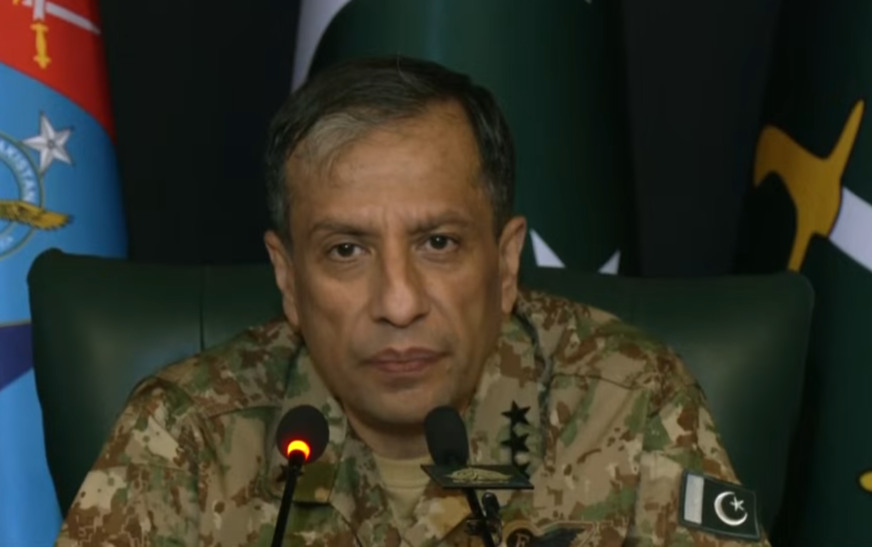
As today is the first anniversary of these events, both nations are holding commemorative ceremonies, Pakistan’s military leadership is currently marking the day at Air Headquarters in Islamabad to honour the PAF’s performance during the clash.
Read also: Rallies held across KP to pay tribute to Pakistan Armed Forces on Marka-e-Haq anniversary