
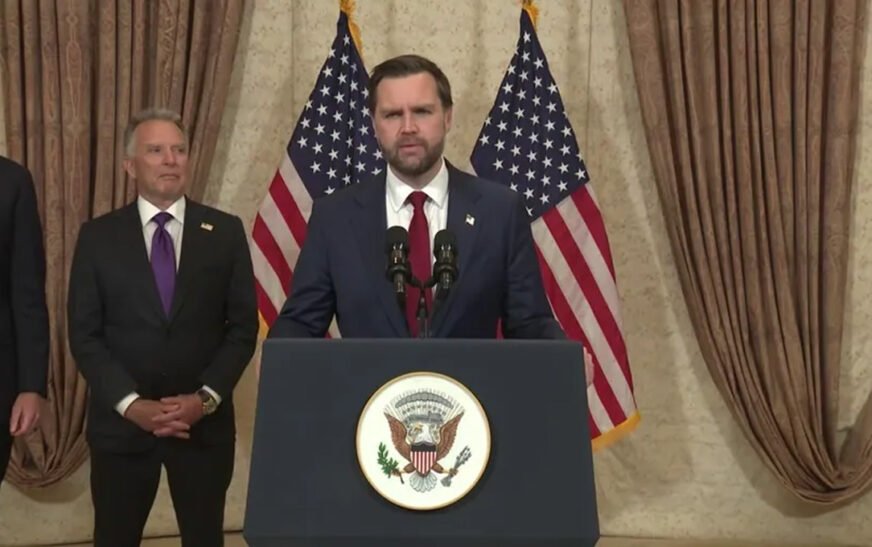
ISLAMABAD: Despite a breakdown in talks, US Vice President JD Vance is still confident about achieving a deal with Iran, as per a source close to the White House. The official, who asked for anonymity, informed that according to VP Vance, Iran had miscalculated its negotiating power, thus leading to a failed negotiation process.
The talks, which lasted for more than 21 hours, mainly revolved around Iran’s nuclear arms and security in the region. However, an agreement could not be reached by both sides. According to Vance, who headed the US delegation, there still were chances of reaching an agreement even if they didn’t succeed at first.
Miscalculation of Negotiating Position
According to the source, during the important talks, VP Vance felt that Iran had miscalculated their negotiating position. “Iran misjudged its position in the talks and we hope that we will eventually reach a deal,” said the official, while elaborating on the recent failed negotiations.
Both parties couldn’t find a solution to issues such as Iran’s nuclear weapons and how to restore peace frameworks in the region. In addition, the official also noted that no solution was yet been found to some other problems, such as Strait of Hormuz.
Ongoing Diplomatic Talks
The diplomat elaborated on the fact that even though no conclusive agreement had been reached through these talks, they did not mark the end of diplomatic efforts. According to JD Vance, the team leader, who worked alongside President Trump’s son-in-law, Jared Kushner, and special envoy Steve Vitkov, there was no stopping them from reaching an agreement with Iran.
The Iranian team was led by their Parliamentarian Speaker, Mohammad Baqer Qalibaf, and their foreign minister, Abbas Araghchi.
Points of disagreement
The primary issues discussed during the marathon talks included Iran’s uranium enrichment activities, the creation of a comprehensive peace framework in the region, and the restoration of the free passage of ships through the Strait of Hormuz, which has been a significant flashpoint for international tensions. The discussions also touched on Iran’s support for various militant groups across the Middle East, which remains a major point of contention.
While the diplomatic outcome remains uncertain, the U.S. is holding out hope for future negotiations to address these pressing issues.
Conclusion
Despite the collapse of the recent talks in Islamabad, U.S. Vice President JD Vance’s belief in a potential agreement with Iran highlights the continuing diplomatic efforts. Both countries face significant challenges in reaching a lasting deal, but the U.S. remains committed to pursuing a resolution to the nuclear and regional security issues.