
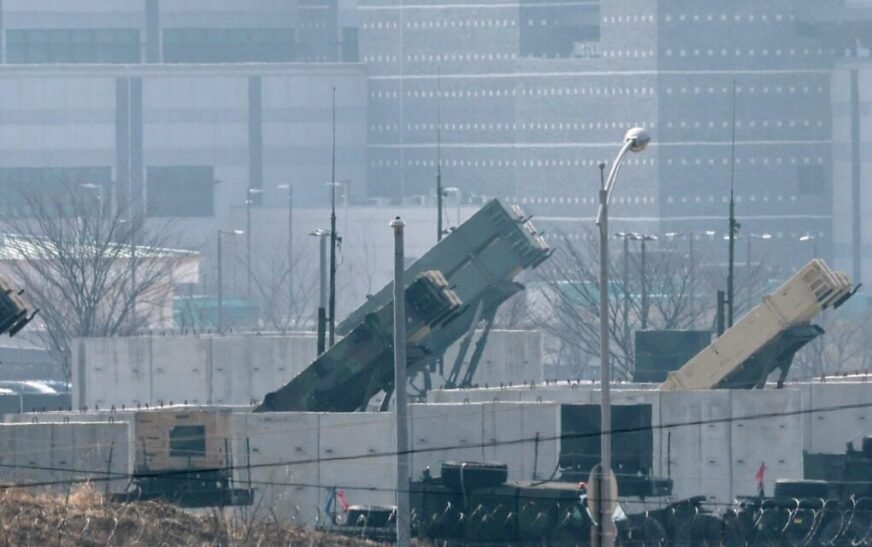
The United States has transferred its latest missile defense system, the THAAD, installed in South Korea, to Israel, according to videos and reports released by South Korean state media.
According to media reports, the transfer was completed from Osan Air Base in Pyeongtaek, south of the South Korean capital, Seoul. Not only the defense equipment, but also several American soldiers operating the system have been sent from South Korea to the Middle East by American military transport aircraft.
This defense system was originally installed in South Korea to protect against the increasing missile threats and possible aggression from North Korea, but it has now been transferred there to strengthen Israel’s defense capabilities. According to foreign news agencies, the aim of this move is to protect Israel from possible ballistic missile attacks by Iran or its allies.
The THAAD system is capable of destroying enemy missiles in the air at its highest level, and its deployment is being hailed as a major defense development in the current tense situation in the Middle East. The deployment has also sparked a debate about the security vacuum in South Korea, as the system was a key part of its defense line.
The United States installed the system in the Seongju region of South Korea in 2017 to counter North Korea’s growing nuclear and missile programs. At the time, China and Russia strongly protested the deployment because THAAD’s powerful radar is capable of spying deep into Chinese territory.
The presence of the system in South Korea has always been a controversial issue, but despite North Korea’s recent missile tests, the US preferred to remove it from there and send it to the Middle East, which shows that the protection of Israel is currently at the top of Washington’s priorities.
The transfer appears to be part of the US military’s “Dynamic Force Employment” policy, under which it is rapidly moving its defense assets to different parts of the world as needed, rather than keeping them in one place. The withdrawal of the system and troops from South Korea also indicates that the US believes that South Korea’s own defense system (L-SAM) is now capable of countering North Korea to some extent, or that the clouds of war in the Middle East are so deep that the system is urgently needed there.
The move could send a message to North Korea that US attention is shifting away from the Korean Peninsula, potentially giving Pyongyang the impetus to further provocative experiments. On the other hand, there are concerns within South Korea about whether the decision is favoring other allies at the expense of their security.
Read also:North Korea conducts a cruise missile test before Trump visit to South Korea