

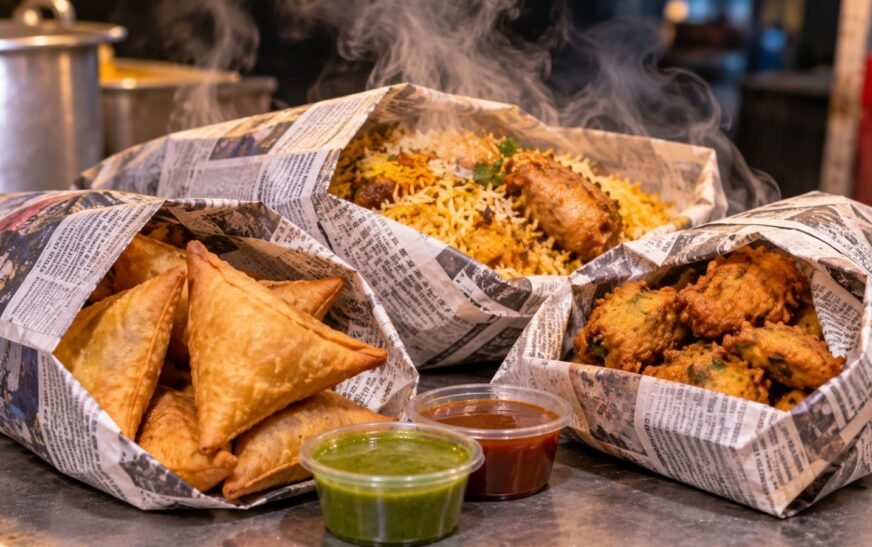
Wrapping hot and fried foods such as samosas, pakoras and jalebis in newspapers is a common practice in Pakistan. However, health experts have warned that using newspapers or ordinary printed paper for food packaging can pose serious risks to human health.
According to health experts, chemicals present in printing ink can transfer to food, particularly when hot or oily items come into direct contact with newspaper.
Experts explained that newspaper ink is specifically manufactured for printing purposes and is not considered safe for food packaging.
According to experts when hot or fried foods are placed on newspapers, heat and oil can cause chemical components in the printing ink to migrate into the food. These substances can then enter the human body through consumption.
According to the health expert, newspaper ink may contain lead, solvents and other potentially harmful chemicals. Exposure to these substances through food can have adverse effects on human health.
The presence of lead and other harmful substances in the body may contribute to several health problems, including anaemia and neurological disorders. Children and pregnant women may be particularly vulnerable to their harmful effects.
Health experts further warned that exposure to harmful chemicals found in newspaper ink could affect liver function and brain health.
Apart from the risks associated with printing ink, newspapers may also carry dust, dirt and germs. During their production, distribution and handling, newspapers pass through factories, streets, shops and the hands of numerous people, increasing the possibility of contamination.
Such contaminants can also come into contact with food and potentially enter the body when contaminated items are consumed.
The health expert advised people to avoid wrapping hot foods, including samosas, pakoras and other fried items, in newspapers or ordinary printed paper.
Instead, consumers should use food-grade packaging materials, such as butter paper, aluminium foil and other materials specifically designed for food contact.
Experts also recommended using safer food storage containers made of stainless steel and glass while avoiding unsuitable plastic materials and newspapers for food storage and packaging.
Health experts emphasise that changing this seemingly harmless everyday practice can help reduce unnecessary exposure to potentially harmful chemicals and contaminants.
Consumers are therefore advised to pay attention not only to the quality of food they purchase but also to the materials used to package and store it.
READ ALSO: Large Consignment of Unhealthy Meat Seized in Topi, Six Persons Arrested











1 Comment
[…] READ ALSO: Wrapping hot food in Newspapers may pose serious health risks […]