
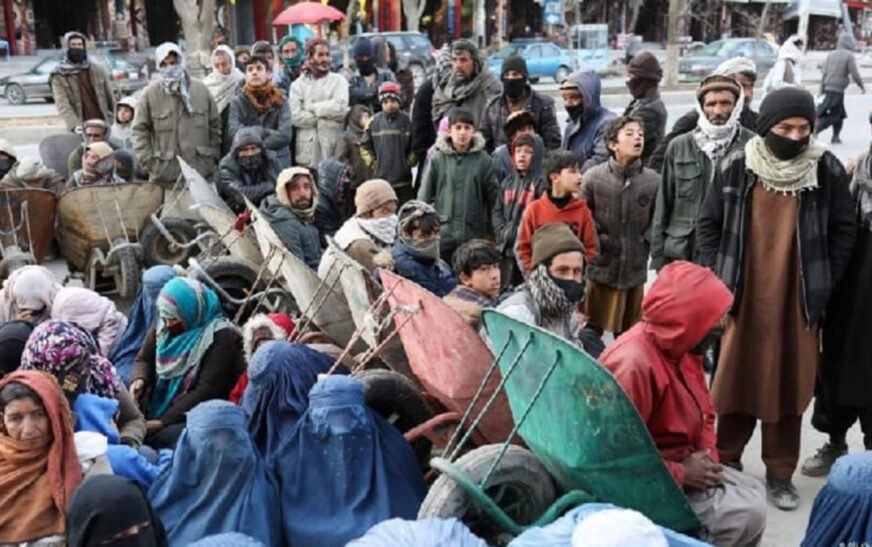
KABUL: A latest report issued by the UN pronounced Afghanistan’s economic crisis as a severe one, with a considerable rise in the number of unemployed persons-upward to 75%.
Also, the UN report disclosed that over 90% of the Afghan population is below the poverty line.
Besides, the report pointed out that the major deductions in per capita income, GDP and foreign aid are the reasons for the country’s economic situation still getting worse.
The first half of 2025 saw a 6.5% decline in Afghanistan’s GDP and the monthly per capita income fell to nearly $100.
Additionally, the UN reported that over 70% of the Afghan population relies on humanitarian aid, which has been cut back considerably over the past few months.
The unending closure of the Afghanistan-Pakistan border is resulting in a daily loss of about a million dollars to the Afghan economy, and the forced return of Afghan nationals from adjacent countries has worsened the condition of public services in Afghanistan.
EU raises concern over drinking water emergency in Afghanistan
Afghanistan is facing a drinking water shortage, leading the European Union to release an official alert and raise concerns about escalating public health dangers.
Foreign news sources report, the European Union announced over 20 million individuals in Afghanistan do not have access to drinking water. The consumption of water has caused a swift rise in water-related illnesses throughout the nation.
In its alert, the EU stated that critical water shortages and inadequate sanitation facilities have led to risks to public health. The problem is worsened by infrastructure and ineffective administrative oversight.
The report revealed that than 80 percent of Afghanistan’s population must rely on contaminated water. Consequently, over 212,000 children have been impacted by illnesses stemming from water.
The World Health Organization (WHO) reports that a minimum of 9,548 instances of illnesses have been formally documented across the country, underscoring increasing strain on the delicate healthcare infrastructure.
The situation has been aggravated by the sanitation infrastructure and the policies of the Taliban-led administration. By May 2025, it was reported that no than 442 medical facilities had closed, further reducing the availability of healthcare services.
International organizations warn that continued neglect of water infrastructure and governance failures could push the country deeper into a humanitarian emergency, putting public health, food security, and social stability at serious risk.