
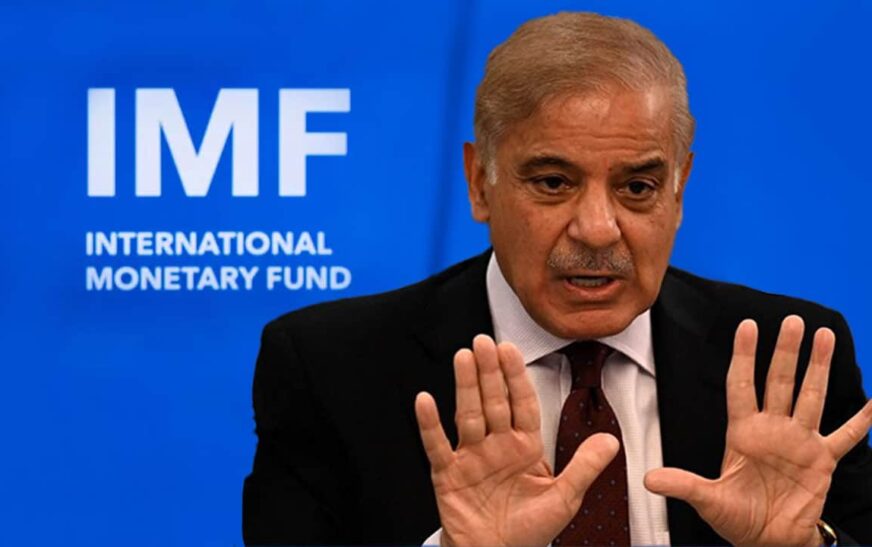
ISLAMABAD: The International Monetary Fund (IMF) has predicted that inflation in Pakistan will rise to 9.9% in the current fiscal year 2026-27, while it has maintained the economic growth estimate at 3.5%.
This new prediction shows that the international lender does not agree with the government’s estimates of relatively low inflation and higher economic growth. The IMF presented these estimates in its latest World Economic Outlook (WEO) report to be released on Tuesday.
In April, the IMF had predicted inflation in Pakistan at 8.4% during FY 2026-27, which was also maintained in the July report, but now it has been increased.
The IMF did not give Pakistan-specific reasons for the increase in the inflation forecast, but it has also raised inflation estimates for the Middle East and Central Asia region due to the ongoing conflict in the Middle East and its impact on energy supply and prices.
The new inflation forecast for Pakistan is also higher than the government’s target of 8.2%. During the recent review talks, the federal government and the State Bank had expressed hope of achieving the annual target despite inflationary pressures, but the high inflation forecast may now focus attention on tight monetary policy and a possible increase in interest rates to control prices. The government is passing on the burden of rising fuel prices in the international market to domestic consumers, and heavy taxes are also imposed on it.
The government has also introduced a scheme to give monthly compensation of Rs 2,000 to motorcyclists and Rs 3,000 to small vehicle owners, but the IMF has objected to the scheme, calling it broad-based and expensive.
The IMF has maintained its estimate of Pakistan’s economic growth rate at 3.5% for the current fiscal year. On the other hand, Pakistani authorities had tried to convince the IMF during review talks that the country would achieve the annual economic growth target of 4%.
Finance Minister Muhammad Aurangzeb, in an interview with a foreign news agency, had said that he still clearly expects Pakistan’s economic growth rate to exceed 4%. Pakistan has been implementing various IMF programs for economic stability for the past several years.
According to the World Bank, reduction in development spending as part of policies adopted for economic stability is also among the reasons for rising poverty in the country. The IMF has also increased the estimate of Pakistan’s current account deficit to 1% of GDP, which is about $4.4 billion.
Read also: IMF made an important Prediction on the economy of Pakistan