

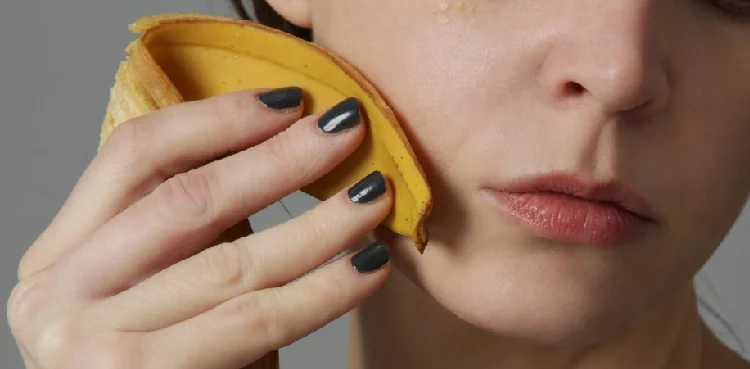
Rubbing banana peels on the face has become a popular skincare trend on social media, with users promoting it as a natural way to improve skin health and achieve a youthful appearance.
However, dermatologists say there is no scientific evidence that banana peels can significantly improve skin or deliver the effects of cosmetic treatments such as Botox.
According to experts, the trend may have gained popularity because bananas and their peels contain nutrients, including vitamins C and A, along with other beneficial compounds.
The growing interest in reducing food waste may also have encouraged people to experiment with leftover banana peels as part of their skincare routines.
Dermatologists explain that although bananas offer several nutritional benefits when consumed, applying their peels directly to the skin does not necessarily provide the same benefits.
Botox works by temporarily weakening or paralysing specific facial muscles, helping reduce the appearance of wrinkles. Banana peels, however, do not contain ingredients capable of producing a similar effect.
Experts also point out that vitamin C naturally present in bananas is not formulated to penetrate the outer layers of the skin and reach deeper layers where it could provide its potential skincare benefits.
Dermatologists say most people can try applying banana peels to their faces, provided they do not experience any adverse reactions.
Some users may notice temporary skin moisturisation, but there is no established scientific evidence that the practice provides significant or long-lasting skincare benefits.
However, the practice may not be suitable for everyone, as certain individuals can develop allergic reactions or skin irritation.
Experts advise people to stop using banana peels immediately if they experience irritation or an allergic reaction. Warning signs may include a sudden burning sensation, skin rashes, or swelling of the lips and tongue.
Anyone experiencing such symptoms should seek medical advice.
While banana peels may appear to be an inexpensive and natural skincare option, dermatologists emphasise that viral beauty trends should not be mistaken for scientifically proven treatments.
READ ALSO: Do eggs and egg yolks increase the risk of heart attacks?