

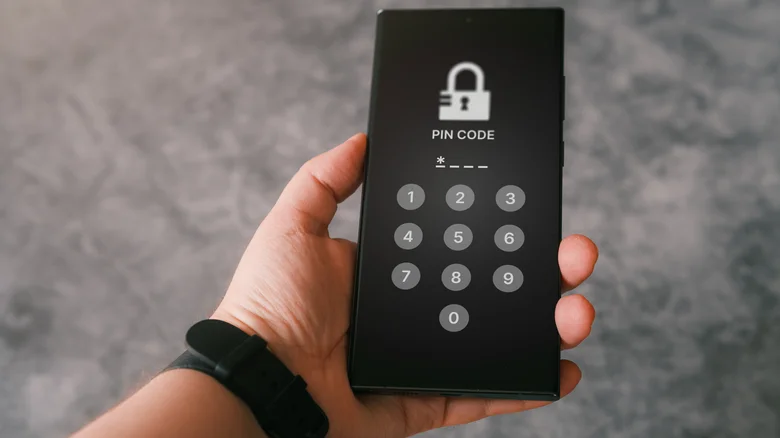
ISLAMABAD: Smartphones offer a range of security features, including passwords for online accounts and PINs for unlocking devices. But which of the two provides better protection?
Passwords are commonly used to access multiple online accounts, while a PIN is generally linked to a specific device and is used to gain access to its system.
One key difference is that passwords are typically stored or processed by online services, meaning that if a password is compromised, a hacker could potentially use it to access an account and steal personal information.
A device PIN, on the other hand, is tied to the device for which it was created and cannot normally be used remotely. In this respect, a PIN can provide an additional layer of security.
PINs can also be used to access websites and apps through passkeys, an alternative to traditional passwords. Passkeys are digital credentials designed to provide a simpler and more secure way of signing in without storing conventional passwords on web servers.
When passkeys are enabled on a website or app, users can authenticate themselves using a device PIN or biometric information such as a fingerprint or facial recognition.
Since the PIN itself is not transmitted over the internet during the authentication process, it is considerably harder for a remote attacker to intercept and misuse it. Even if a device is compromised, the PIN is protected through the device’s security mechanisms, while conventional passwords can be vulnerable if they are exposed or reused across multiple accounts.
However, using a PIN does not automatically guarantee strong security. Users should avoid easily guessable combinations such as 1022, birthdays or other obvious numbers.
A strong, unique PIN, combined with biometric authentication and passkeys where available, can provide stronger protection than relying solely on traditional passwords.
Read also: WhatsApp Scam Alert: New Fraud Method Targets Pakistani Users