
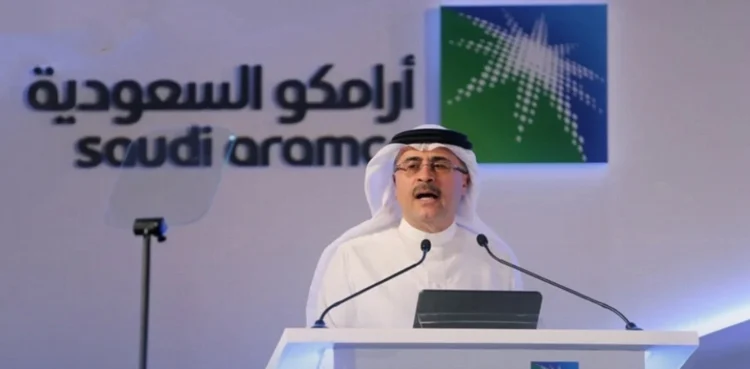
Saudi Aramco Chief Executive Amin Nasser has warned that global oil stocks have fallen to critically low levels amid the conflict in the Middle East and continuing tensions in the Strait of Hormuz.
Addressing the 2026 Energy Intelligence Forum in London, Amin Nasser said the global energy market had become highly vulnerable to any further supply disruption until the Strait of Hormuz fully reopens.
According to Saudi media, Amin Nasser said it could take up to two years to replenish oil stocks depleted during the recent Middle East conflict and restore them to normal levels.
He said emergency releases from strategic petroleum reserves by major countries could provide temporary support to the market but would not resolve the underlying imbalance between global oil supply and demand.
Amin Nasser said the seven-month conflict involving the United States, Israel and Iran had disrupted around 3 billion barrels of oil supply in the region. He said this was equivalent to nearly half of the crude oil and refined petroleum products that would normally have passed through the Strait of Hormuz during the same period.
More than 1 billion barrels of oil have been drawn from global inventories to mitigate the impact of the supply disruption, while governments have released more than 300 million barrels from their strategic reserves and reached agreements to release additional volumes, he said.
According to the Aramco chief, a significant portion of the additional supply came from oil companies’ own inventories, which he described as the last major source available to support the market.
Nasser said commercially available oil stocks worldwide had now fallen below 6 billion barrels, although most of these reserves could not be brought to the market immediately.
He warned that the global energy system was already under severe pressure, with spare capacity available to maintain uninterrupted supplies becoming extremely limited.
Nasser also said vessels travelling through the Strait of Hormuz had come under attack in recent weeks, while Aramco-owned pipelines, refineries and ports had also been targeted.
Sources of transparency should not be turned into sources of aggression, he said, stressing the need to protect the security and stability of global energy supplies.
Read also: Power crisis deepens as loadshedding intensifies across country