
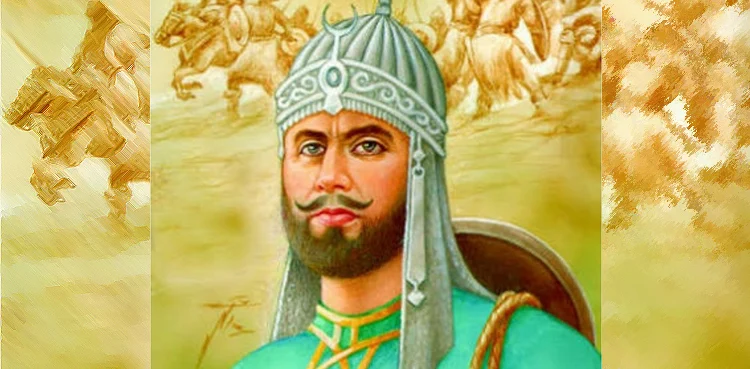
Sher Shah Suri ruled for just five years, from 1540 to 1545. But every Indian who has ever used the Rupee, traveled on the GT Road, or received a letter through the post, lives in the world Sher Shah Suri built.
Before Akbar became great, before the British built their empire, there was Farid Khan- a jagirdar’s son from Sasaram, Bihar, who defeated Humayun, and became Sher Shah, the Lion King.History remembers him as a warrior. India should remember him as its greatest administrator.
India’s economy was in chaos. Lodis, Mughals, regional sultanates – everyone minted their own coins in different metals and weights. Trade was a gamble.Sher Shah introduced a standardized silver coin weighing 178 grains. He called it the Rupiya. It was 97% pure silver. For the first time, from Bengal to the Indus, merchants trusted one coin. The British kept it. Independent India kept it. That word in your pocket – Rupee – is Sher Shah Suri era currency.
He also introduced copper Dam and gold Mohur with fixed exchange rates: 1 Rupiya = 64 Dam. India’s first tri-metallic currency system.
The Grand Trunk Road – He didn’t just build a road. He rebuilt an ancient Mauryan highway into a 2,400 km superhighway from Chittagong in Bengal to Kabul in Afghanistan.
It was called Sadak-e-Azam.What made it revolutionary was not the road, but what was on the road: Shady trees on both sides for travellers Sarais (Inns) every 2 kos (about 8 km) – free food and lodging for Hindus and Muslims, with separate kitchens for Brahmins.
India’s first postal system with relay horses that could deliver a message from Bengal to the Indus in days Kos Minars – brick pillars every kos to measure distance Today we call it NH-19 and GT Road. Trucks still ply the same alignment he laid 480 years ago.
The Father of Land Settlement: Before Sher Shah, farmers were at the mercy of corrupt officials who took whatever they wanted. After him, there was a system.He invented Zabti System, He ordered the land to be measured using a standardized bigha and a rope called Sikandari GazLand was classified into three categories.
Average produce of each was calculated The state share was fixed at one-third of the average produce Farmers could pay in cash or kind. He gave Patta (title deed) to every farmer and took Qabuliat (deed of agreement) – the origin of land records in India Akbar’s great finance minister Raja Todar Mal just copied Sher Shah’s system.
The British called it the Ryotwari system and used it till 1947.He said: “The cultivator is the root of prosperity.”4. Justice That Did Not Sleep His justice was ruthless and impartial. A famous story: his own son’s jagir official exploited merchants. Sher Shah ordered him to be jailed and punished.
He created an efficient police system. If a merchant was robbed in a village, the Mukadam (village headman) was held responsible. If he couldn’t find the culprit, he had to compensate the victim himself. Crime almost vanished on highways.
Administration: He divided his empire not by tribe or religion, but by administration:47 Sarkars (districts) and hundreds of Parganas (talukas)Each Sarkar had two chief officers: Shiqdar-i-Shiqdaran for law and order and Munsif-i-Munsifan for justice and revenue.
This is the exact model the Mughals and later the British Collector-SP system followed. He was secular before the word existed. His army had Afghans, Rajputs, and Turks. His administration had Hindus at the highest levels. He repaired old temples and built new mosques, but never destroyed places of worship for politics.
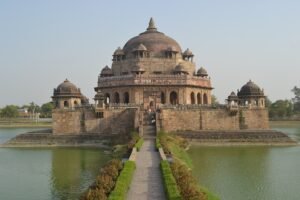
The Irony He died in 1545, in a freak gunpowder explosion while besieging Kalinjar Fort. He was only 59. His tomb in Sasaram – a majestic structure standing in the middle of a lake – is a symbol of his genius.
Humayun returned after his death and Mughal chroniclers tried to erase him. But they couldn’t erase the Rupee, the GT Road, or the land records. Sher Shah proved that you don’t need 50 years to become immortal. You just need 5 years of vision.
Read also: leader of the Peace Jirga Nowshera, arranged farewell lunch for Afghan nationals