
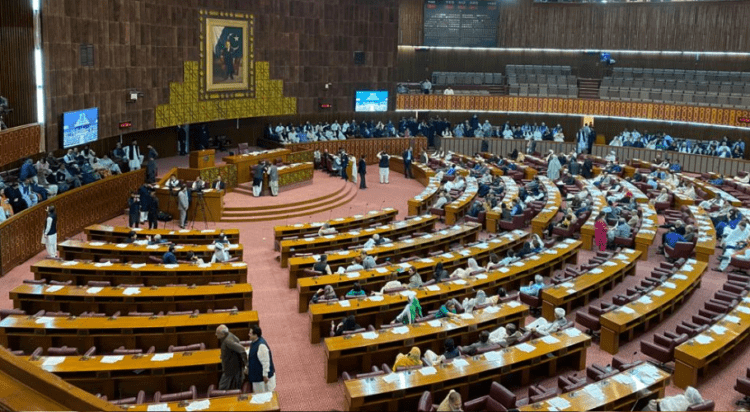
ISLAMABAD: Debate over the creation of new provinces in Pakistan has resurfaced after two federal ministers called for the establishment of new administrative units as part of governance reforms. However, under Pakistan’s Constitution, creating a new province or altering the boundaries of an existing one requires a stringent constitutional process rather than a simple political or administrative decision.
The debate was triggered when the ministers for Interior, Mohsin Naqvi, and the minister for Communications, Abdul Aleem Khan, raised the issue of the creation of “new units” in order to enhance administrative efficiency.
Under Article 239(4) of the Constitution of Pakistan, any proposal, in which the boundaries of a province are changed either to divide a single province into other provinces, has to be approved first by the provincial assembly concerned.
The Constitution says that such approval will not be obtained through a simple majority but will be obtained if the proposal gets at least two-thirds votes of the total members of the concerned provincial assembly.
Once the proposal is approved by the Provincial Assembly, it has to be submitted as a constitutional amendment in the Parliament. Due to the fact that amendments to provinces’ borders mean making changes to the Constitution, the bill will have to be passed by a two-thirds majority in both the National Assembly and the Senate.
It is only after obtaining approval from both chambers of Parliament that the constitutional amendment will be submitted to the President for his assent.
It should be noted that the constitutional process is intended to protect the interests of the federating units of Pakistan by securing their consent before the boundaries of any province are changed.
One of the example of this constitutional process took place in 2018, when the 25th Constitutional Amendment allowed for the merger of FATA into the Province of Khyber Pakhtunkhwa.
If proposals to establish provinces or any other new administrative unit are pursued in the future, they will have to follow the same constitutional process. This means obtaining a two-thirds majority in the concerned provincial assembly, securing the required support in both houses of Parliament through a constitutional amendment, and finally receiving presidential assent before any new province can legally come into existence.