
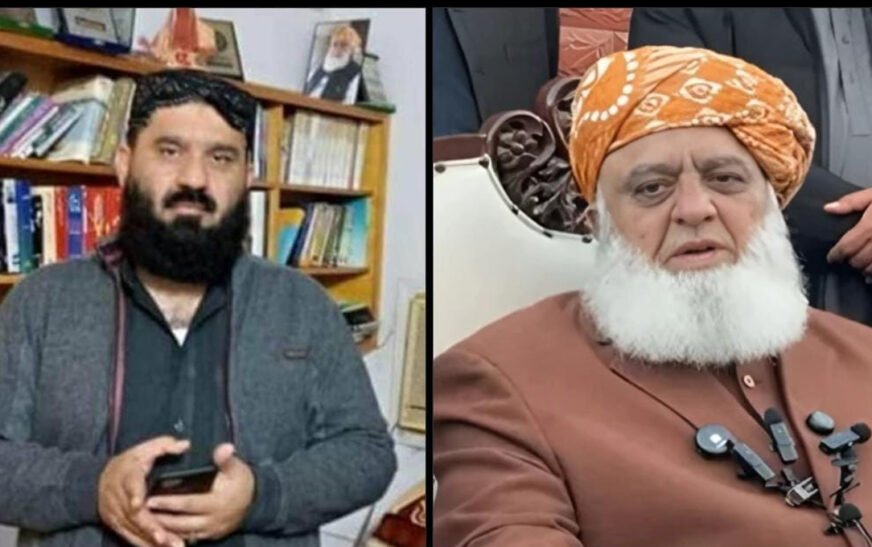
ISLAMABAD: The controversial bureaucratic career of Zia-ur-Rehman, brother of Jamiat Ulema-e-Islam-F (JUI-F) chief Maulana Fazl-ur-Rehman, has re-emerged in the public spotlight, serving as a highly debated case study of nepotism, political patronage and the bypass of meritocracy within Pakistan’s civil services.
Originally a Grade-17 engineer at the Pakistan Telecommunication Company Limited (PTCL), Zia-ur-Rehman’s rapid elevation to key administrative posts has raised serious questions. Unlike career bureaucrats who undergo rigorous competitive processes, such as the federal Central Superior Services (CSS) or Provincial Management Service (PMS) exams, Rehman bypassed these entry barriers entirely.
Using political leverage, Rehman was inducted into the provincial administration of Khyber Pakhtunkhwa on deputation, quickly securing appointments as Assistant Commissioner and subsequently Deputy Commissioner. His career trajectory defied standard service rules further when he was transferred across provincial boundaries to Punjab, where he was appointed Deputy Commissioner of Khushab.
The peak of Rehman’s controversial postings occurred in July 2020. Following a high-level meeting between Maulana Fazl-ur-Rehman, Pakistan Peoples Party (PPP) co-chairman Asif Ali Zardari, and Bilawal Bhutto-Zardari in Karachi, the Sindh government abruptly appointed Rehman as the Deputy Commissioner of Karachi’s crucial District Central.
Under standard civil service rules, a PMS officer from Khyber Pakhtunkhwa cannot be directly posted to key administrative slots in Sindh without a formal cadre-sharing mechanism. The appointment triggered fierce backlash from opposition parties, including the Pakistan Tehreek-e-Insaf (PTI) and the Muttahida Qaumi Movement-Pakistan (MQM-P), forcing the Sindh government to withdraw the notification and return his services to the federal government within days.
Critics argue that this case exposes a pattern of nepotism within the JUI-F leadership, pointing to other family appointments. During the Pakistan Democratic Movement (PDM) coalition government, Maulana Fazl-ur-Rehman’s son, Maulana Asad Mahmood, served as the Federal Minister for Communications, while his brother-in-law, Haji Ghulam Ali, was appointed Governor of Khyber Pakhtunkhwa a tenure later marred by allegations of administrative misconduct.
As opposition voices demand accountability, the case of Zia-ur-Rehman remains a stark reminder of how political influence can reshape the hierarchy of Pakistan’s administrative machinery at the expense of qualified, exam-tested public servants.