

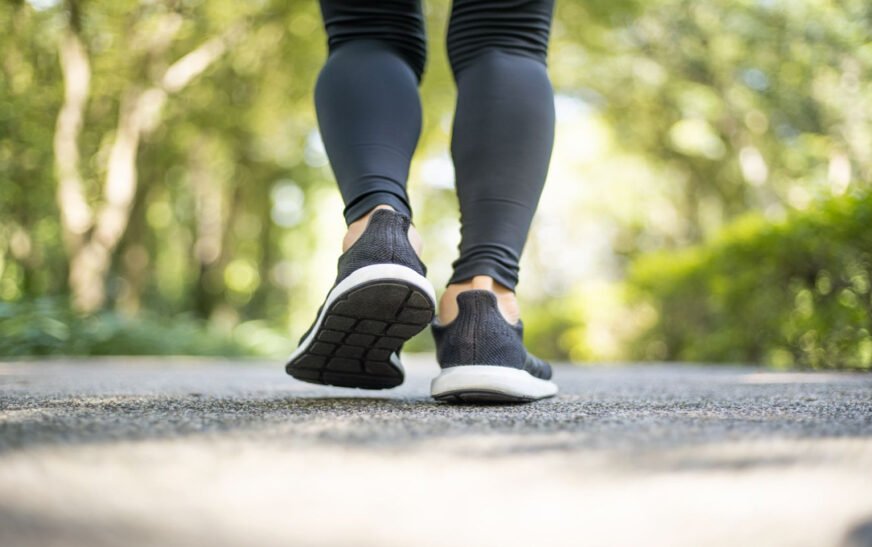
ISLAMABAD: A new study now provides the exact answer to the common health inquiry regarding the number of steps one must walk daily to reduce body weight.
According to research published in the International Journal of Environmental Research and Public Health, walking 8,500 steps daily contributes to weight loss and keeps the body healthy.
For this purpose, researchers have taken information from 3,758 participants involved in 18 clinical studies. All 3,758 participants were either overweight or obese. Out of these 3,758 participants, 1,987 made lifestyle changes including exercising and receiving dietary advice. On the other hand, 1,771 participants did not follow any changes besides following a strict diet.
Step counts of participants were monitored for a whole year, and their health status was observed. The results revealed that participants walking 8,500 steps daily had reduced their body weight by 4.39%. Those who stuck to this habit achieved 3.28% weight loss after one year.
Incorporating this healthy habit of walking 8,500 steps daily in our lives can prove fruitful in sustaining our health and achieving weight loss.
Six easy ways to maintain joint health in old age
Earlier, as the age passes joint stiffness and discomfort often become a part of daily life. Health experts say this is largely due to a decline in the substances that keep joints lubricated.
However, simple lifestyle changes can help maintain flexibility and prevent long-term issues. Medical experts explain that joints play a crucial role in connecting bones and enabling smooth movement. Over time, reduced lubrication in the joints can cause bones to rub against each other.
This friction may lead to pain, swelling, and limited mobility. If ignored, it can increase the risk of conditions such as arthritis. Factors like a sedentary lifestyle, poor diet, dehydration, and obesity further accelerate joint deterioration.
Experts share 6 key tips for healthy joints
Experts recommend staying active through exercises
Cycling
At least 150 minutes of physical activity per week can significantly improve joint flexibility and overall mobility.
Low weight
Excess body weight puts added pressure on joints, especially the knees and hips. Maintaining a balanced diet and managing weight can reduce stress on joints and improve their performance.
Stay hydrated
Water plays a vital role in maintaining joint lubrication. Drinking enough water throughout the day helps keep joints flexible and reduces stiffness.
Include Omega-3 rich foods
Experts emphasize adding omega-3 fatty acids to the diet. These nutrients are known to support joint health and help reduce inflammation.
Prepare before exercise
Starting exercise without preparation can increase the risk of muscle strain or injury. Light stretching and warm-up exercises help prepare joints for movement and improve flexibility.
Correct sitting and standing posture
Correct sitting and standing posture can prevent unnecessary strain on joints Good posture supports joint alignment and reduces the risk of long-term discomfort.














1 Comment
[…] Read also: Lose weight by walking: How much is enough? […]