
TEHRAN: The blocking of the Strait of Hormuz has had a great effect on global maritime traffic as the United States attempts to remove Iran’s grip over this vital passage have failed.
It should be noted that defense experts believe that Iran does not need its navy to protect the Strait since it uses various layers of defense. These include mobile missile batteries positioned along its coast, fast boats, sea mines, and kamikazes that can target any ship that enters the waters of the Strait of Hormuz.
Although the US has declared victory over Iran by claiming that it has disabled its navy forces, especially its submarines, the threat posed by Iran’s Midget submarines persists. Therefore, it has caused concern regarding the safety of using this passage.
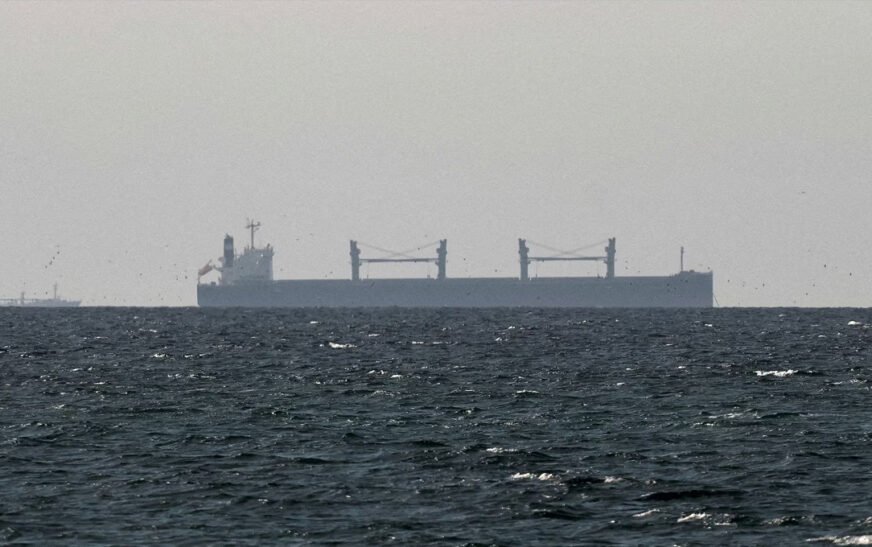
Following the strikes by Israel and the US, Iran has made many attacks against different maritime ships to prove its dominance in the Strait of Hormuz. According to data from the International Maritime Organization (IMO), between February 28 and April 1, more than 20 ships have been attacked in the Gulf of Oman, Strait of Hormuz, and Persian Gulf, killing ten people.
The IMO further reported that the blockade of the Strait of Hormuz has left nearly 2,000 ships stranded in the region, with Iran allowing only a few countries to pass their ships. Of these 2,000 vessels, approximately 400 are currently in the Gulf of Oman. The rest have been redirected towards the Suez Canal or are taking a much longer route around the Cape of Good Hope in South Africa to deliver goods to Asia and Europe.
In response to the blockade, Saudi Arabia has turned to the Red Sea for oil shipments instead of using the Strait of Hormuz.
Over the last 24 hours, 15 ships have passed through the Strait with Iran’s permission. However, according to Iranian media, this number is 90% lower than before the onset of the conflict.
Trump warns Iran: Reopen Strait of Hormuz or face ‘Hell’
Earlier, US President Donald Trump has made another serious warning to the Iranian regime, declaring that the whole country will be annihilated if an agreement is not reached, with virtually nothing being left. According to Trump, who was talking to ABC News, the Middle East issue should be solved in days and not in weeks.
“I don’t think that sending our troops will definitely be necessary but it may also become one of our options,” Trump commented. “The agreement can be reached tomorrow or never.”
“The Middle East crisis should come to an end in days, not in weeks. If we can’t reach an agreement, we could destroy the whole of Iran, leaving very little behind,” he added.
On Sunday, Trump threatened the Iranians that they would pay heavily if they failed to reopen the Strait of Hormuz, a vital artery for international oil transportation.
In his statement published on social media, he stated, “If Iran doesn’t open the Strait of Hormuz, we’ll target the civil infrastructure, and Iran will meet its doom. Tuesday will be Power Plants day and Bridge Day for Iran.”
Furthermore, Trump added that if the strait was kept shut, “Life will be hell for them; you just watch.” This remark came before the deadline that President Trump had set for Iran to expire, which was within 48 hours.
The strait has been closed ever since February, after tensions were raised in the region.
In yet another interview, Trump disclosed that if Iran did not agree to terms soon, the United States would consider blowing up everything in Iran, including its oil. Trump declared, “Bridges and power plants in Iran will be blown up.”
Trump said that some members of the Iranian government have started negotiations, and the chances of reaching a consensus are high by Monday. Trump also pointed out that the Iranians involved in the negotiation had been pardoned.
ALSO READ: Thousands of Ships stranded in Strait of Hormuz, disrupting global shipping