
Who was El-Mencho, and why did his death causes reaction in Mexico?
Nemesio Oseguera Cervantes, alias El-Mencho, was born on 17 July 1966 in the rural community of Culotitlán in Aguililla, Michoacán, in Maxico. Some sources state that his birth-given name was Rubén but that he changed it to Nemesio in memory of his godfather. He was widely known by his alias “El Mencho”, a nickname that derives from Nemesio. Another nickname was “The Lord of the Roosters”, said to be derived from his love for cockfighting.
El Mencho grew up in a poor family that cultivated avocados. He had five brothers: Juan, Miguel, Antonio, Marín, and Abraham. He dropped out of primary school in fifth grade to work in the fields. At the age of 14, he started guarding marijuana plantations. A few years later, he decided he wanted a better life for himself and immigrated illegally to the U.S. state of California in the 1980s. To conceal his identity in the U.S., he used different names and combinations, such as “Rubén Ávila”, “José López Prieto”, “Miguel Valadez”, “Carlos Hernández Mendoza”, “Roberto Salgado”, among others.
Time in the US
In 1986, he lived in the San Francisco Bay Area. He was arrested by the San Francisco Police at the age of 19 for stolen property and carrying a loaded gun. Two months after his arrest, his first child was born. According to border entry records, El Mencho crossed the U.S.–Mexico border several times during the late 1980s under other aliases. The DEA and Mexican investigators believe that it was during this time that he became involved in methamphetamine production and trade in Redwood City, alongside his brother-in-law Abigael González Valencia.
In 1989, El Mencho was arrested again in San Francisco for selling narcotics. He was deported to Mexico several months later, but re-entered the U.S. and resettled in San Francisco. In September 1992, he was arrested again, this time on federal drug charges in Sacramento, California. According to court records, El Mencho and his brother Abraham were at a San Francisco bar known as the Imperial to carry out a heroin deal.
Five ounces for US$9,500. Abraham was in charge of the transaction, while El Mencho acted as a lookout. El Mencho was 26 years old at that time, much younger than Abraham, but was savvy enough to recognize that the transaction was a set-up by the police. He told his brother that the men to whom they gave the heroin handed over perfectly stacked dollar bills instead of loose ones. Through a wiretap conversation, the police overheard El Mencho warning his brother to never do business with them again since they were undercover cops.
Arrest and deportation
Three weeks after the incident both men were arrested by the police. In court, El Mencho insisted that he was innocent. He said he was not involved in the heroin deal and that the undercover agents were lying about him handling the drugs. The prosecution insisted that both siblings were working together.
El Mencho was left with few options; if he pleaded not guilty, his brother Abraham, who already had felony drug sentences in his record would probably face life in prison. His defence understood that if he decided on a jury trial, he would likely be convicted. He decided to plead guilty and protect his brother from life imprisonment. He was sentenced to five years and imprisoned at the Big Spring Correctional Center in Texas, which houses a large population of illegal immigrants.
After three years, he was released from prison on parole and deported to Mexico at the age of 30. In Mexico, he joined the local police forces of Cabo Corrientes and Tomatlán in the state of Jalisco. After some time, he left the police and joined organized crime as a full-time member of the Milenio Cartel.
To strengthen his relationship with the Milenio Cartel, El Mencho married one of the clan leader’s sisters, Rosalinda González Valencia. It was in this criminal group that El Mencho would become a leading figure in organized crime.
Death of El-Mincho
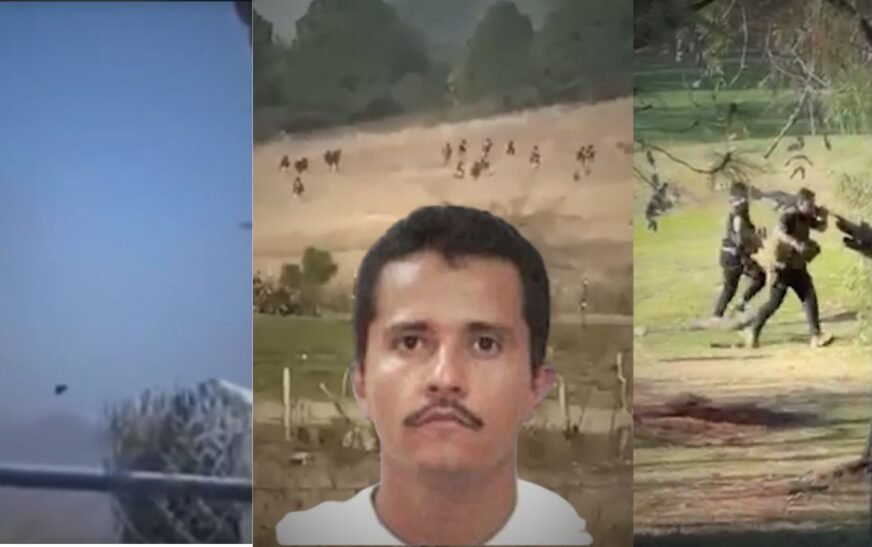
On 22 February 2026, Oseguera was taken into custody by the Mexican Army in a security operation in Tapalpa, Jalisco, but died of injuries suffered in the firefight during his transfer to Mexico City.
The operation sparked clashes in the area, resulting in multiple vehicles being set on fire throughout Jalisco.The police said shootouts and explosions were reported during the clashes. The number of casualties is currently unknown. Criminal groups blocked roads with burning vehicles in Jalisco and in the states of Guanajuato, Nayarit, Michoacán and Tamaulipas.
Read also:Trump announces ground action against Venezuela amid rising tensions