
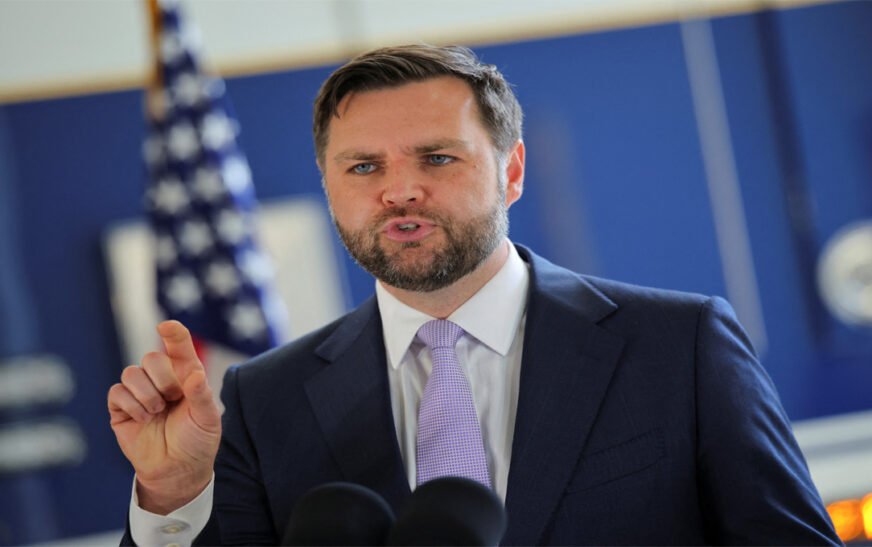
ISLAMABAD: United States Vice President JD Vance is set to visit Pakistan later this week as part of efforts to find a peaceful resolution to the ongoing conflict with Iran. According to CNN, the visit will focus on negotiations for a ceasefire and strategies to end the war, with discussions already underway in Pakistan about the details of the visit.
The US presidential delegation will include JD Vance and other senior officials, according to two unnamed administration sources who spoke to CNN. The officials are still working on establishing the visit schedule which will decide the visit location and the people who will attend.
Pakistan plays a key role in US-Iran diplomatic talks because Turkey has been proposed as a possible site for discussions, according to reports. Pakistan has become a vital mediator in the conflict after delivering the 15-point peace proposal from Washington to Tehran. The plan addresses sensitive issues such as Iran’s nuclear ambitions and ballistic missile program. Turkey is also reported to have contributed to the diplomatic process.
The world community expresses increasing worries about the US-Iran conflict due to the current diplomatic efforts between the two nations. Pakistan serves as an impartial mediator in the region which enables both sides to communicate with one another.
US President Donald Trump declared that Vice President JD Vance will conduct talks with Iran together with Secretary of State Marco Rubio and Jared Kushner and Special Envoy Steve Witkoff. The team will continue nuclear disarmament discussions while they work on various security issues that exist throughout the area.
The White House is still working to complete the visit details and the ongoing negotiations. The delegation will show either Marco Rubio and Jared Kushner and Steve Witkoff, who will accompany JD Vance to Pakistan or only the Vice President.
Pakistan has become the focus of international attention because the country continues its active involvement in diplomatic efforts that aim to resolve the Iran conflict. The US administration engages in peace negotiation efforts because international pressure demands a resolution to the ongoing Middle Eastern tensions.
The visit functions as a vital de-escalation measure because regional stakeholders believe the talks will create conditions for a permanent peace deal. The world watches to see how these diplomatic efforts develop and whether they will resolve one of the most challenging geopolitical conflicts of the 21st century.