
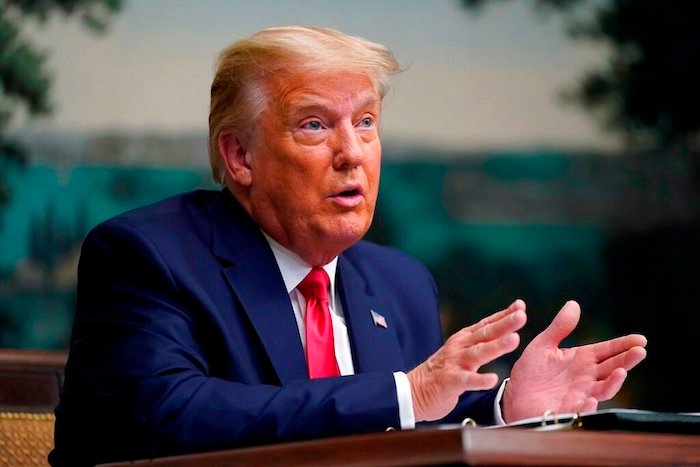
WASHINGTON: During a ceremony held at the White House, US President Donald Trump announced a new trade agreement with India and referred to it as “not like the old deals”. In his speech, Trump pointed to the fact that the deal came after India decided to slowly stop oil imports from Russia.
Trump, indicating his positive outlook on the deepening of relations between the two countries, said “India may hate us now, but soon they will love us.” Besides that, he also hinted at the US tariffs on India that could be dropped whenever he wishes.
Furthermore, Trump, as a related move, named Sergio Goor the next US Ambassador to India. Goor took the oath during the ceremony and will be the US representative in New Delhi.
Trump also touched on other international issues, talking about the work his administration did with Israel to get the ties between Syria and Israel smooth and pointing out the good relationship between Turkey’s President Erdogan and Syria.
On local matters, Trump asserted that he had the backing of the Democrats to stop a government shutdown, and thus, the deadlock would be solved very soon.
ALSO READ: Trump announces Kazakhstan’s inclusion in the Abraham accords
Trump promises $2,000 payout for every eligible American citizen
President Donald Trump of the United States announced a plan to hand out at least $2,000 to every citizen from the money made by newly imposed trade tariffs. The announcement was made on the 9th of November 2025 in Washington.
Based on the reports from various foreign media, President Trump informed them that he would pay the amounts to the citizens of the USA as a share, however, people with high incomes would not be allowed to participate in the program.
“We are winning trillions of dollars deals, and shorty after we will be able to pay off our $37 trillion national debt which is very huge,” said Trump. “Every American, except those with higher incomes, will be given at least $2,000.”
Trump’s announcement comes while the U.S. Supreme Court is examining the legal aspects of Trump’s tariffs policies, some of which have been dismissed by the lower courts.
On the sidelines, a couple of economists suggest that this move might be a part of Trump’s larger plan to garner local support and to spark off consumer spending before making other important financial decisions.
In his last month’s interview, Trump had a word or two about such a move. He suggested that the administration could use the tariff proceeds to give each citizen $1,000 to $2,000 annually. He went on to say that the new tariffs might lead to a revenue of more than $1 trillion for the U.S. Treasury per year.
As a result of the approval, the direct payments will be among the largest single occasions where the government handed down money directly to its people.