
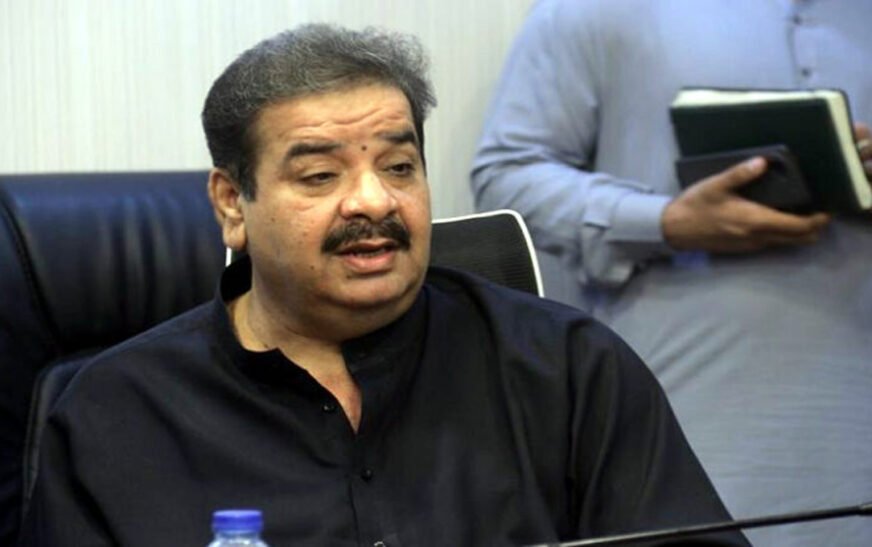
QUETTA: Balochistan’s Minister for Agriculture, Ali Hassan Zahri, has resigned from the provincial cabinet.
The Balochistan Chief Minister Mir Sarfraz Bugti received Ali Hassan Zahri’s resignation from his position as a representative of the Pakistan Peoples Party (PPP).
Zahri resigned because he could not dedicate sufficient time to the agriculture sector which needed his complete attention.
He stated that his promises to the Balochistan population required him to work as a public official but he could not meet those commitments.
The Chief Minister of Balochistan will make a decision about the resignation after consulting various sources, according to sources.
Death toll of terrorists reached 197 as 22 more Indian Khwarij killed in Balochistan
At least 22 terrorists were killed, and heavy caches of weapons were recovered during a military operation in Zahri and Mashkhail areas of Balochistan on Tuesday.
The weapons include ammunition and communication equipment typically found in the possession of militant groups or extremists. It includes hand grenades, AK-47 magazines, and a military-grade weapon (R-15 rifle), which were seized during the targeted operation in different areas of Balochistan.
The recovered items also include several mobile phones and SIM cards, indicating the use of technology for communication and liaison between these groups, which is common practice for such organizations. This suggests that these groups use phones and SIM cards to coordinate their operations and stay in touch with each other.
The security forces also recovered batteries, chargers, and other accessories, indicating operations in remote areas where constant charging is required to maintain connectivity. In addition, a large number of prepaid phone cards are also visible, which can be used for secure communication.
Security forces also recovered drugs, medical supplies, and some narcotics. It also contains packets of medicine such as tranexamic acid, which is used to treat bleeding, and this indicates that the group uses these drugs to treat the militants’ wounds or to care for its fighters.
In addition, the presence of illegal drugs or controlled substances and syringes indicates that these groups may be involved in drug trafficking or use these materials in combat activities. The packet of Malmal Kattar (a local brand), which indicates that smuggling routes are being used in the area, as Balochistan has always been associated with illegal trade as well as militancy and militant activities.
Balochistan has long been a hotbed of militancy, particularly by Baloch nationalist groups seeking autonomy or independence from Pakistan. Various extremist groups, including Baloch separatists and jihadist elements, are active in the region, leading to military operations and clashes.
Drug trafficking, human trafficking, and arms trafficking are also major problems in Balochistan. Due to its proximity to Afghanistan and Iran, the region is strategically located for illegal trade routes. These operations are aimed at weakening the supply chains of militant groups and disrupting their ability to operate.
This situation means that militant organizations receive arms, logistical support, and illegal trade, which are essential in this war from India.