
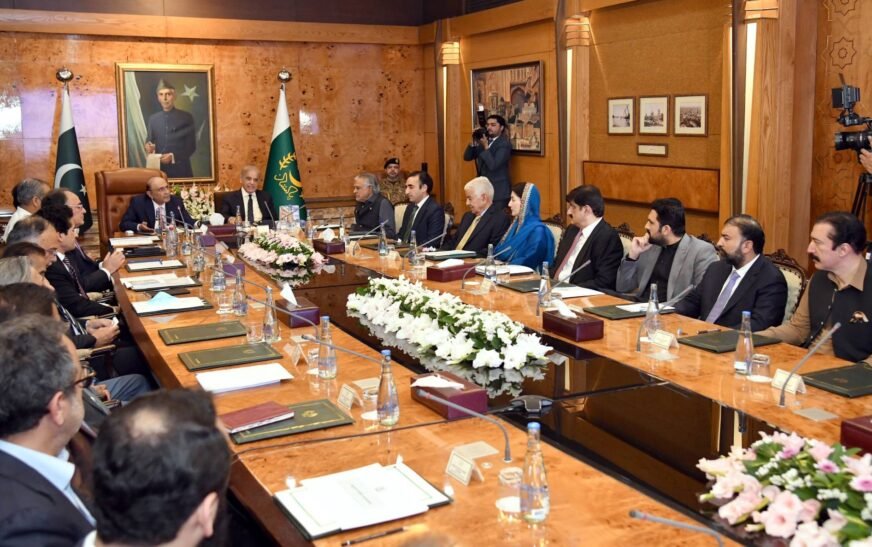
ISLAMABAD: President Asif Ali Zardari on Monday chaired a high-level consultative meeting at the Presidency, directing the federal and provincial governments to take exhaustive measures to shield the common man from the rising costs of essential goods and energy amid regional instability.
The meeting was attended by Prime Minister Shehbaz Sharif, the Chief Ministers of all four provinces, the leadership of Gilgit-Baltistan and Azad Jammu and Kashmir, and senior federal ministers. The forum conducted a comprehensive review of the national security and economic landscape, specifically focusing on the impact of global oil and gas supply pressures on the domestic market.
During the briefing, the Deputy Prime Minister and Foreign Minister updated the participants on Pakistan’s proactive diplomatic engagements with Turkey, Saudi Arabia, Egypt, and other regional stakeholders. It was noted that despite global volatility, timely decision-making has ensured that the country maintains ample fuel reserves with no immediate risk of disruption.
The Presidency was informed that the Prime Minister has repeatedly rejected proposals for oil price hikes, opting instead to fund public relief through aggressive austerity measures. These steps include a significant reduction in government expenditure, a cut in the development budget, and the immediate grounding of 60 per cent of the government’s vehicle fleet.
President Zardari said that the state would not abandon economically vulnerable sections during this challenging period. He called for a synchronised strategy involving economic management, energy planning, and food security sectors. Additionally, the President stressed the importance of a national public awareness campaign to encourage energy conservation, the use of public transport, and shared travel modes to manage aggregate demand effectively.
The provincial leadership, including Punjab CM Maryam Nawaz Sharif, Sindh CM Murad Ali Shah, KP CM Muhammad Sohail Afridi, and Balochistan CM Sarfaraz Bugti, briefed the meeting on localised efforts to control price hikes and ensure the steady supply of essential commodities.