
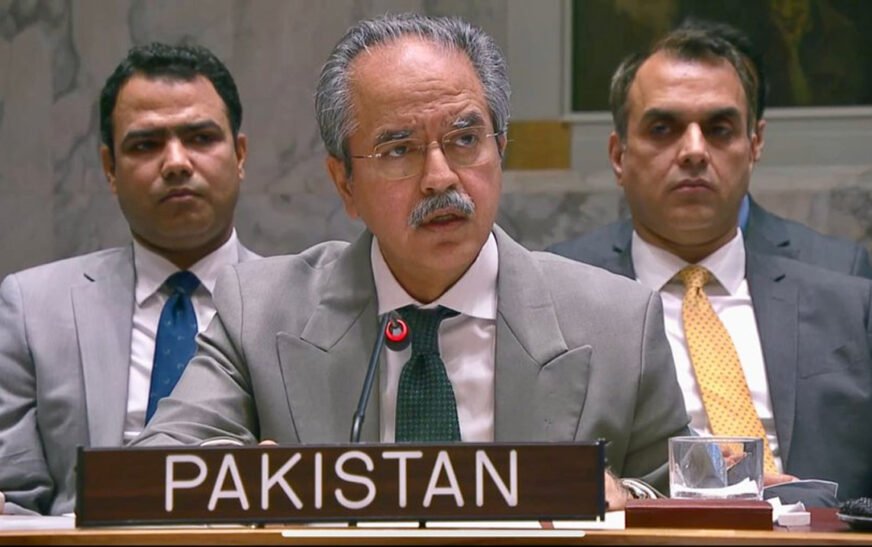
NEW YORK: Asim Iftikhar, Pakistan’s Permanent Representative to the UN, in his remarks during the emergency meeting of the UN Security Council, made it clear that the UN Charter explicitly opposes the use of force in international relations.
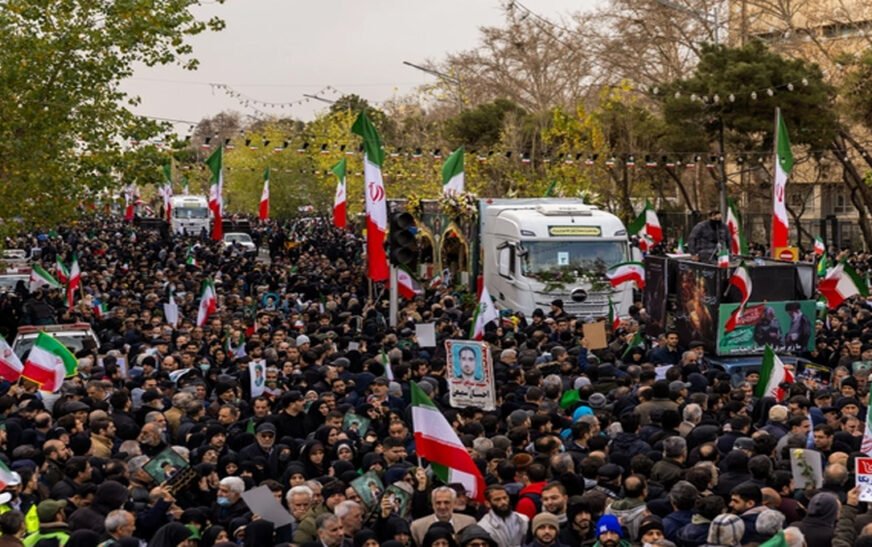
The first thing he did was to draw attention to the troubles in Iran, then he stressed the point that a peaceful and stable Iran would be the best scenario for Pakistan.
“We are constantly monitoring the situation in Iran and in the neighbouring areas very closely. Pakistan has never severed its ties with Iran and has always kept a special relationship with it,” Iftikhar expressed. “We are hopeful that the situation in Iran will soon be normal. Pakistan will continue to do its diplomatic efforts for these issues to be resolved.”
Iftikhar indeed underlined the importance of diplomatic means, negotiations, and asked all the involved parties to participate in the process of peaceful resolution. Moreover, he was in favour of the international actors working for the cooling down of tensions, encouraging the parties to be tolerant and follow international law.
U.S. Ambassador: US stands with Iranian people, criticizes Iranian government
Speaking at the United Nations Security Council, the U.S. Ambassador blasted the Iranian government for its actions and drove home the point that the United States is very much and wholly on the side of the people of Iran.
“The United States is with the brave people of Iran,” said the U.S. representative during the meeting. “The violence and oppression taking place in Iran have repercussions on a global level, influencing the peace and security of the neighbouring countries. Besides, Iran is the one that has been financing the likes of Hezbollah and Hamas, to cause further instability in the Middle East.”
The U.S. Ambassador also recalled the sad incident of a woman who recently died in Iran because she was not wearing a hijab, calling it a horrifying example of the regime’s total disregard for human rights. “We will always support the Iranian people,” was the representative’s response. “The Iranian regime is becoming weaker and while they claim to be in talks, their deeds say the opposite. Iran is acting in a manner that is not acceptable in the diplomatic world.””
The U.S. representative highlighted that President Trump has kept all options open concerning Iran, which implies continued pressure on the Iranian government until its behaviour changes.
“We support the people of Iran in their quest for freedom and human rights,” the U.S. envoy concluded, which was also a way of reaffirming America’s commitment to making the Iranian government accountable for its actions.
Russian Ambassador: External intervention in Iran poses threat to world peace
The Russian Ambassador to the United Nations declared the use of force and threats against Iran by the United States a violation of international norms and condemned these actions very sharply. The US position on Iran was thus putting the two countries in diametrically opposite stands.
“At the UN Security Council session, the Russian representative remarked, ‘We are absolutely against the application of force and the menacing acts of the U.S. towards Iran.’ ” Russia denounces any moves that disrupt the internal situation of Iran. According to Moscow, the conflict is serious enough to endanger the whole world.”
The Russian delegate underlined the necessity for dialogue and diplomatic methods to ease the tension. The Russian ambassador indicated that “to lower the tension, the parties must all rely on the talks for a peaceful solution.” “The policy of economic sanctions and threats is not only unfair but also harmful to all sides.”
He then amplified the need for international law to be observed and for countries to be given their due rights. “It is very important to follow the global laws and to give the countries their rights. The only possible solutions to the crisis are diplomacy and dialogue, not violence and military pressure.”
Russia’s appeal for de-escalation and an amicable settlement is in stark contrast to the U.S. policy which has been more rigid and has adopted a harder line against the Iranian government.