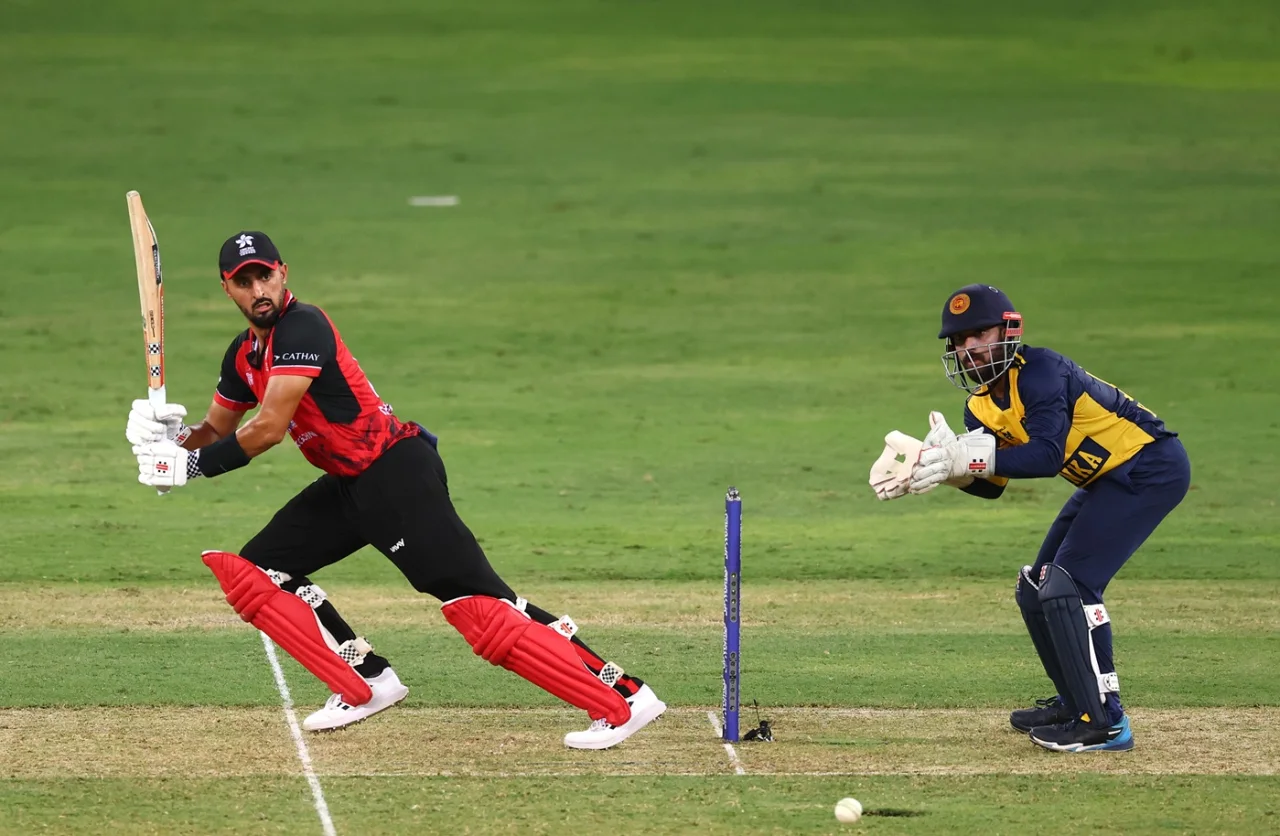

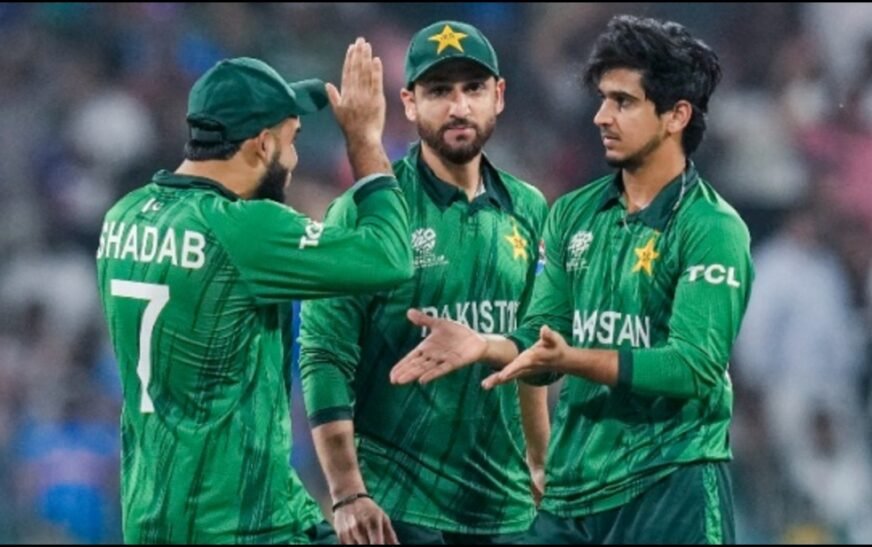
COLOMBO: The ICC Men’s T20 World Cup reached its historic milestone when Pakistan used six spin bowlers during their match against India and became the first team to do so in one inning.
Pakistan selected six spin bowlers for their bowling lineup which included Saim Ayub and Salman Ali Agha and Shadab Khan and Mohammad Nawaz and Abrar Ahmed and Usman Tariq.
Saim Ayub led the team by achieving three bowling victories. Usman Tariq and Shaheen Afridi and Salman Ali Agha each took one wicket while one batter was run out.
The T20 World Cup became the first competition to allow Pakistan to use six spin bowlers during a single match because they selected this strategy for their current tournament battle.
Pakistan falls short as India claims victory in T20 World Cup
Earlier, India defeated Pakistan by 61 runs in the T20 World Cup held in Colombo on Sunday. The highly anticipated match took place in the capital of Sri Lanka. After the toss, the Indian captain did not shake hands with the Pakistani captain, which some viewed as a violation of the spirit of cricket.
Batting first, India set a target of 176 runs for Pakistan to chase. However, Pakistan’s batting line-up struggled from the beginning. None of the players managed to contribute significantly, and the team only managed to score 114 runs in total. Only three players reached double figures, while three others went out without scoring.
Pakistan’s innings started poorly, with opener Sahibzada Farhan being dismissed for a duck in the very first over. The second wicket fell with the scoreboard reading just 6 runs, as Saim Ayub was out LBW to Bumrah after scoring 6 runs. The third wicket also fell quickly; captain Salman Agha was dismissed for just 4 runs, bringing the total to 13. Pakistan’s fourth wicket fell at 34 runs when former captain Babar Azam was bowled for 5 runs.
The national team’s fifth wicket fell at a score of 73 runs, with Usman Khan returning to the pavilion after scoring 44 runs, stumped off Akshar’s delivery. The sixth wicket fell at 78 runs, as Muhammad Nawaz added only 4 runs to the total. Pakistan’s seventh wicket also fell at 78 runs when Shadab Khan was caught off Tilak Verma’s bowling for 14 runs. The eighth wicket fell at 97 runs, with Faheem Ashraf scoring 10 runs before he was dismissed. The ninth wicket also fell at 97 runs, with Abrar Ahmed getting out without scoring.
In the first innings, Pakistan managed to dismiss an important Indian player, Abhishek Sharma, who was out for a duck in the first over, caught by Shaheen Shah Afridi off Salman Agha’s bowling. India’s second wicket fell at a total of 88 runs, with Ashwin Kishan scoring 77 runs off 40 balls, aided by 3 sixes and 10 fours, before being bowled by Saim Ayub. India’s third wicket fell at 126 runs when Tilak Verma was LBW to Saim Ayub for 25 runs. On the very next ball, Saim Ayub claimed the wicket of Hardik Pandya, who also went out without scoring.
India’s fifth wicket fell at 159 runs, with Suryakumar Yadav caught off Usman Tariq’s bowling for 32 runs. The sixth wicket fell at a total of 174 runs when Shivam Dubey was run out after scoring 27 runs. India finished their innings with 175 runs, losing their seventh wicket on the last ball when Akshar Patel was caught by Shaheen Afridi without scoring.
Saim Ayub bowled impressively, taking 3 wickets. There were no changes made to the Pakistan team, while the Indian team made two changes, bringing in Abhishek Sharma and Kuldeep Yadav.
National team captain Salman Ali Agha stated after the toss that no changes were made to their lineup and that they were ready to compete against India. He emphasised that their full focus would be on the match and that they had a strategy in mind for playing on such pitches.
The national cricket team lineup included Salman Ali Agha, Sahibzada Farhan, Saim Ayub, Babar Azam, Usman Khan, Shadab Khan, Muhammad Nawaz, Faheem Ashraf, Shaheen Afridi, Abrar Ahmed, and Usman Tariq.