
SRINAGAR: The Indian government’s recent “Operation Sindoor” in Jammu and Kashmir has drawn sharp criticism from rights groups and political observers, who allege that the operation is part of a broader campaign of state repression and demographic engineering in the region.
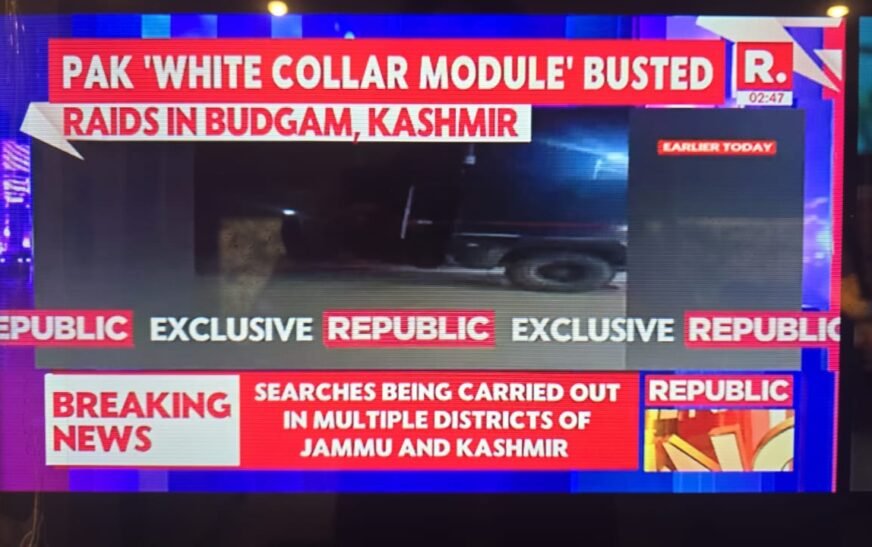
According to official statements, the security sweep — conducted across multiple districts- resulted in the detention of dozens of individuals and the reported discovery of arms, explosives, and “over-ground worker” (OGW) networks allegedly linked to militant groups. Authorities claimed that 16 houses were searched, several SIM vendors were questioned, and “23 OGW sites” were exposed.
However, residents, activists, and independent observers have disputed the government’s version of events, calling the raids “staged” and “politically motivated.” They allege that the operation was designed to create a narrative of renewed militancy and justify intensified military presence in the Valley.
“This is not counter-terrorism; it’s collective punishment,” said one Srinagar-based analyst, who requested anonymity for safety reasons. “These so-called recoveries and arrests are part of a pattern — a spectacle for television cameras, not evidence of genuine security threats.”
Critics argue that the timing of Operation Sindoor coincides with growing domestic dissent and increasing international scrutiny over India’s policies in Kashmir. They accuse the government of using high-profile “anti-terror” operations to divert attention from allegations of human rights abuses and political suppression.
Since the abrogation of Article 370 in 2019, which stripped Jammu and Kashmir of its semi-autonomous status, the region has witnessed sweeping legal and demographic changes. Rights groups say new land and domicile laws enable large-scale settlement by non-residents, effectively altering the region’s demographic composition.
The Armed Forces Special Powers Act (AFSPA) and the Public Safety Act (PSA) — both granting sweeping powers to security forces — remain in effect, drawing sustained criticism from international human rights organisations for enabling arbitrary detentions and providing soldiers with legal immunity.
Several incidents in recent years, including the Pulwama attack (2019) and the Chittisinghpora massacre (2000), have been cited by critics as examples of opaque or allegedly fabricated encounters used to justify repressive policies.
Human rights defenders are calling for independent international investigations into recent operations and for renewed global attention to Kashmir’s political status. “India cannot continue to present itself as the world’s largest democracy while denying fundamental rights to an entire population,” said a statement
Read also: PTI will not accept 27th constitutional amendment: Junaid Akbar